
Bubble Wrap Texture Prints
Press a securely placed piece of bubble wrap onto washable paint and paper to make a textured print without walking on a slippery surface.
Age Safety Note
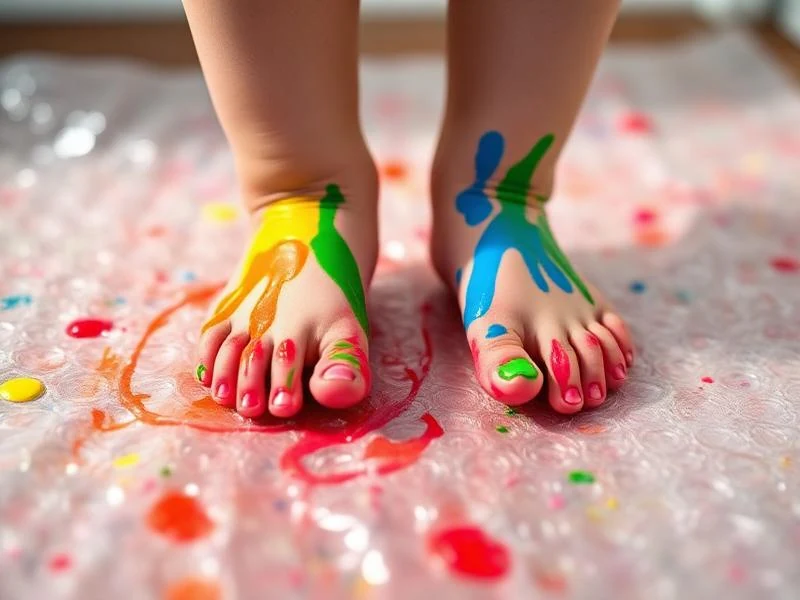
Do not walk or stand on bubble wrap or paint. An adult secures the paper and wrap flat on a stable table, uses age-labeled washable paint, and supervises closely. Keep paint and plastic away from mouths, stop if the wrap tears, and clean spills promptly.
What This Activity Offers
Pressing bubble wrap onto paint leaves a pattern of marks on paper. Children can compare the prints or choose another color; keep the wrap flat and stop if it tears or is mouthed.
Materials Needed
- Bubble wrap
Use a small intact piece, kept flat on the work surface and away from the child's mouth.
- Large paper
Tape it to a stable table so it does not slide.
- Age-labeled washable paint
Follow the product label; do not apply paint to feet.
- Paper plate
Use it to hold a small amount of paint.
- Painter's tape
An adult uses it to secure the paper and bubble wrap flat to the table.
- Damp cloth
Keep it nearby for prompt cleanup.
Prep Tips (Before You Start)
- 1An adult tapes a sheet of paper to a stable table.
- 2Place a small piece of intact bubble wrap flat on the paper and tape its edges down.
- 3Put a small amount of washable paint on a paper plate beside the paper.
- 4Keep extra plastic, scissors, and paint containers out of reach.
- 5Place a damp cloth nearby and clear the floor of trip hazards.
- 6Do not set up the activity on a floor or invite the child to walk on the wrap.
Step-by-Step Guide
- 1Show the child the paper and the secured bubble wrap while they remain seated or standing away from the table edge.
- 2An adult applies a small amount of paint to the wrap or paper, keeping the paint container out of reach.
- 3With close supervision, invite the child to press the flat wrap onto the paper; do not let them stand on it.
- 4Lift the wrap to look at the marks, then set it aside if it has torn or come loose.
- 5Repeat only while the wrap stays intact and the child does not mouth the material.
- 6Stop if the child mouths the wrap or paint, or if the setup shifts.
- 7Wipe hands and clean any paint from the table and floor.
- 8Lay the paper flat to dry out of reach.
Fun Variations to Try
- •Compare marks made with the wrap and with a large adult-held sponge.
- •Use a different color on a second sheet of paper.
- •Take turns pressing the wrap while an adult keeps it secured.
- •Skip the activity if the child mouths plastic or cannot remain away from the table edge.
Cleanup Tips
- Discard bubble wrap if torn or damaged; keep it away from younger children.
- Wipe paint from the table and floor promptly to reduce slipping.
- Wash hands according to the paint label and store supplies out of reach.
- Let the artwork air-dry on a flat surface out of reach.
Additional Tips
- Some children may prefer watching rather than touching the wrap; offer that option.
- Keep the material flat and away from faces and mouths.
- Use a clean sheet of paper if you want to compare prints made with different colors.
- Let the child decide when to stop; responses to texture and sound vary.
References & Further Reading
General background resources for readers. They do not verify or test any specific activity, material, or setup described on this site.
Toddler Ages & Stages
American Academy of Pediatrics
What to expect physically, socially and cognitively from 1 to 3 years.
The Power of Play
American Academy of Pediatrics
An overview of play and its place in early childhood.
Choking Prevention
American Academy of Pediatrics
General guidance on choking risks and prevention for children.
Small Parts and Choking Hazard Labeling FAQs
U.S. Consumer Product Safety Commission
Explains U.S. small-parts rules and choking-hazard labels for children's products; household materials still need separate adult judgment.
Water Safety and Young Children
American Academy of Pediatrics
Guidance on close supervision around water and emptying open containers after use.
Lead in Soil
U.S. Environmental Protection Agency
Explains soil exposure during play and recommends preventing soil eating and washing exposed skin after contact.
Preventing Window Falls
U.S. Consumer Product Safety Commission
Window guards, stops, and keeping furniture away from windows can help reduce fall risks.
Art Material Safety & the AP Seal
Art & Creative Materials Institute
Explains the ACMI certification seals used on some art and creative materials.
Toddler Play & Learning
Raising Children Network
Play ideas and age-based information for caregivers.
Poison Control
America's Poison Centers
Free 24/7 guidance if your child swallows something they shouldn't.
Ready for more fun?