
Toddler Craft Safety Guide
Your complete guide to safe crafting with little ones. Review each activity's materials and age guidance, and supervise closely throughout.
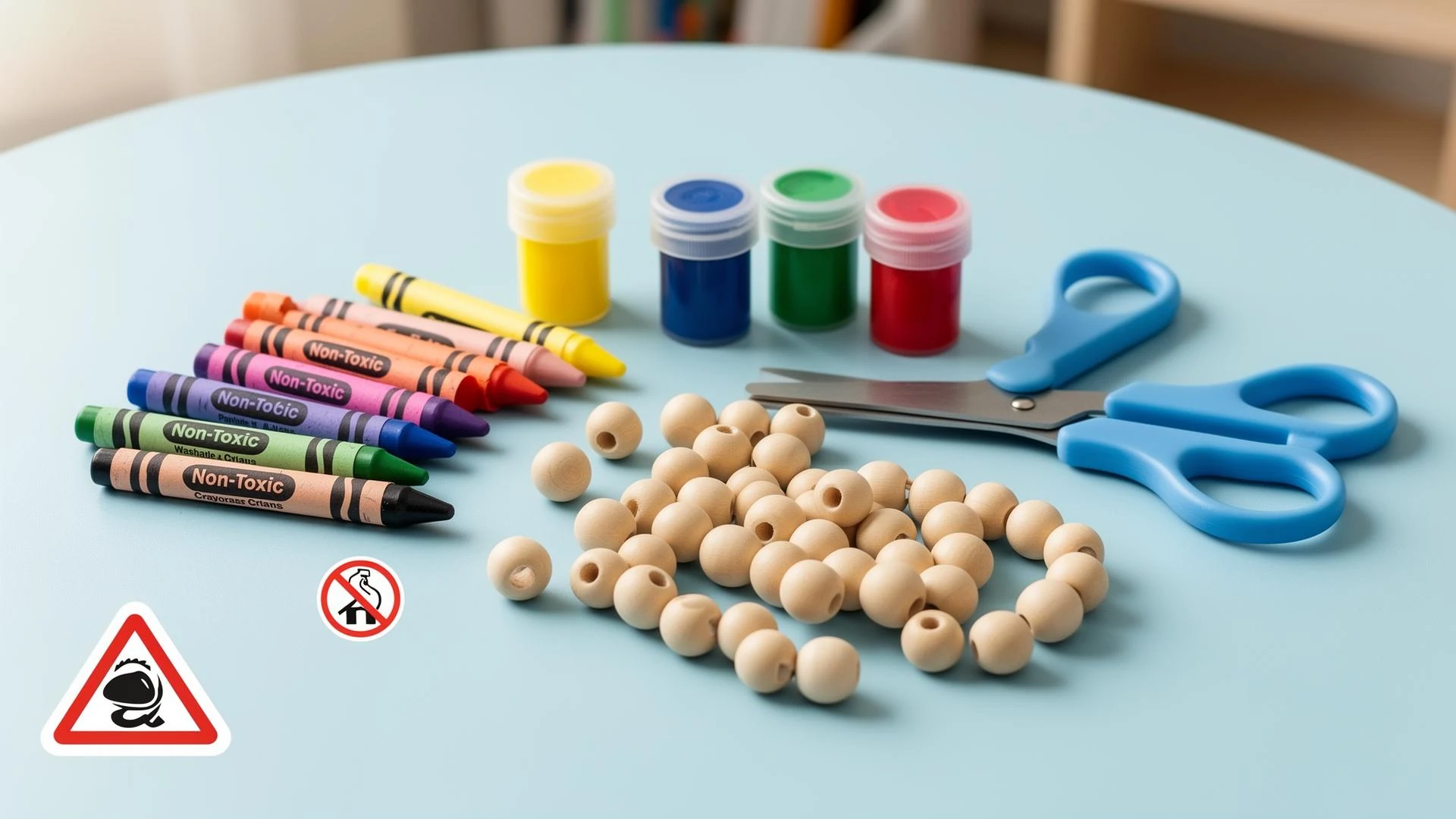
🌟 The Golden Rules 🌟
Always Supervise
Never leave a toddler alone during crafts. Even "safe" materials need watching.
Non-Toxic Only
Follow each product's age label and instructions. Non-toxic does not mean safe to eat.
Size Matters
Small parts can pose choking risks. Check materials carefully; no single size test guarantees safety.
Safety Rules by Age
1-2 Years
- Choose materials intended for the child's age; non-toxic does not mean edible
- Check every item for choking, breakage, and mouthing risks before play
- Stay within arm's reach and supervise continuously
- Avoid paper that can be torn and swallowed
- Skip glitter, beads, and buttons entirely
2-3 Years
- Choose age-labeled materials and account for mouthing and choking risks
- Remove small loose parts that could fit in a child's mouth
- Supervise continuously and keep small materials out of reach
- Child-safe glue sticks only (no liquid glue)
- Large pompoms and materials only
3-4 Years
- Use child-appropriate scissors only with direct adult supervision
- Supervise continuously and have adults handle sharp tools and hot glue
- Follow product age labels; non-toxic materials are not food
- Avoid small beads and other loose parts that present choking risks
- Inspect materials and adapt or skip activities when risks cannot be managed
Material Safety Guide
The FDA advises that children should not use raw flour dough for crafts or play clay. Food ingredients and non-toxic labels do not make craft materials safe to eat. Read the FDA flour safety guidance and follow each product's age label.
Use With Care
- Washable finger paints
Choose products labeled for the child's age and follow the package directions.
- Paper plates
Check for tears or pieces a child could put in their mouth.
- Cardboard boxes
Remove staples and damaged pieces before use.
- Fabric scraps
Use larger pieces and supervise to reduce mouthing and entanglement risks.
- Wooden craft sticks
Check for splinters and use with close supervision.
Avoid These
- Glitter
Choking hazard, eye irritant
- Small beads
Major choking risk
- Buttons
Choking hazard
- Googly eyes
Small parts hazard
- Hot glue
Burn risk
- Sharp scissors
Cutting injury risk
- Pipe cleaners with wire ends
Poking hazard
- Small sequins
Choking and eye risk
Emergency Quick Guide
Accidents happen. Here's what to do if something goes wrong.
Child swallows something
Stay calm. If breathing normally, call Poison Control (1-800-222-1222 US). If choking, perform age-appropriate first aid.
Paint or glue in eyes
Rinse with clean water for 15-20 minutes. If irritation continues, seek medical attention.
Allergic reaction
Stop activity immediately. For mild reactions, wash area. For severe reactions (difficulty breathing), call 911.
Important Numbers
Poison Control (US)
1-800-222-1222
Emergency
911