
Advanced Crafts for 3-4 Year Olds
Ready for more challenge! This age can follow simple steps, use safety scissors, and create with more independence (with supervision, of course!).
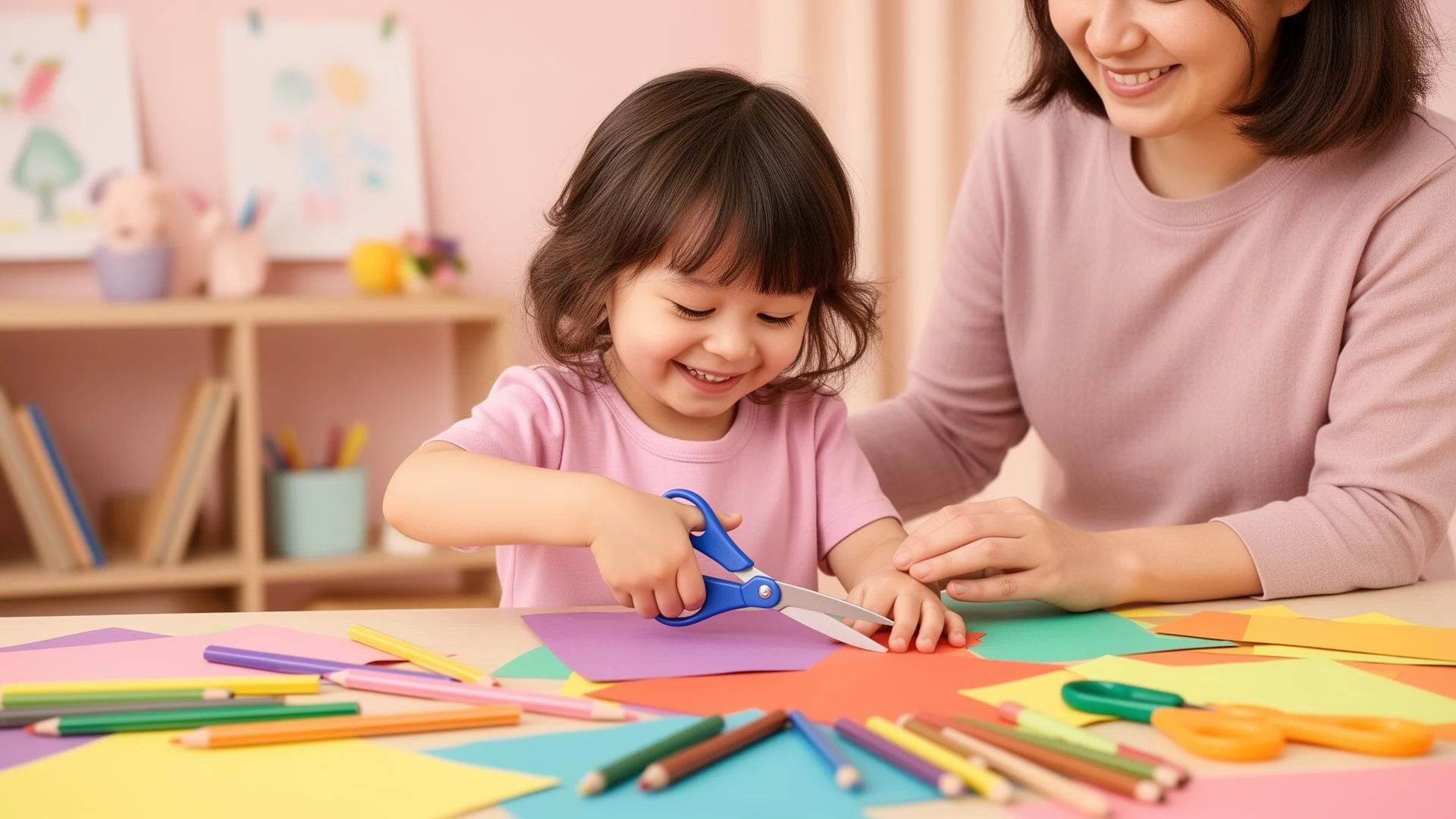
Stay with your child throughout each activity. Follow material age labels and supervise any scissors or small pieces closely.
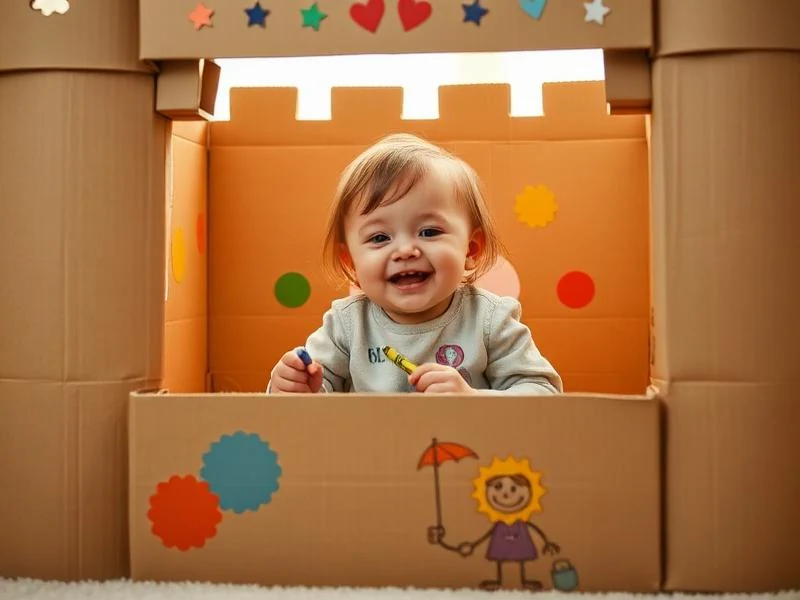
Cardboard Box Castle
Decorate a large cardboard box to use as a castle or another pretend-play space.
Materials Needed:
- Large cardboard box
- Washable crayons or markers
- Scissors (adult use)
Safety Note
An adult cuts the box, removes staples, and checks every edge for rough cardboard or leftover tape before play. Supervise closely.
Parent Tip
Ask what the child would like to add, and keep loose decorations away from anyone who mouths objects.
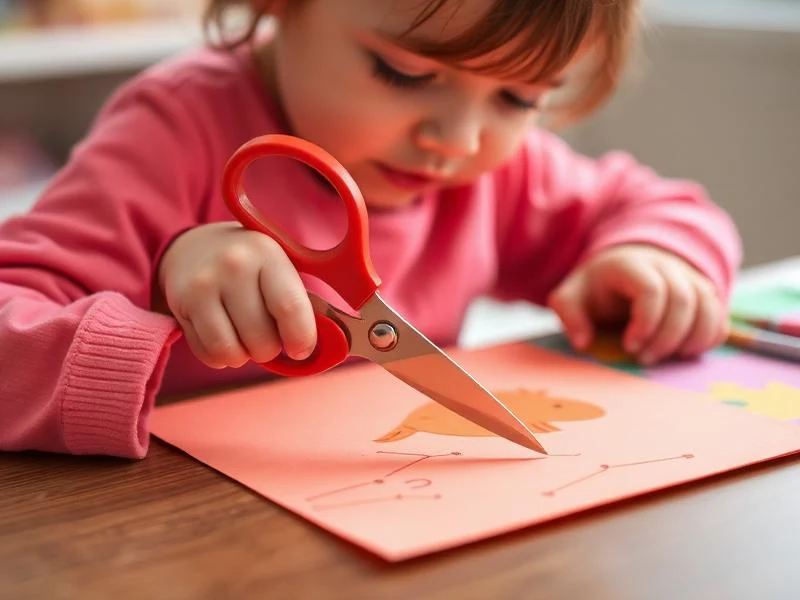
Safety Scissors Practice
Practice simple cuts with age-labeled blunt-tip scissors, adult preparation, and close supervision.
Materials Needed:
- Child-safe scissors
- Thick paper with lines
- Play dough for cutting
- Old magazines
Safety Note
Use only blunt-tip safety scissors. Teach proper grip and 'scissors stay at the table' rule.
Parent Tip
Start with playdough cutting, then thick paper. Thin paper is harder!
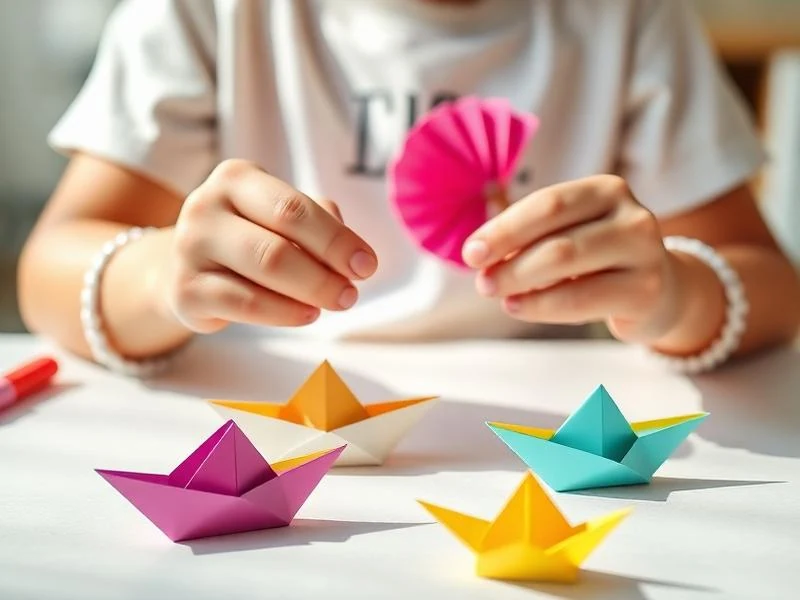
Simple Origami
Fold paper into basic shapes like boats, hats, and fans.
Materials Needed:
- Square paper
- Crayons for decorating
- Stickers
Safety Note
No sharp paper edges. Pre-fold creases if child gets frustrated.
Parent Tip
Start with fan-folding - easiest for this age. Celebrate wonky folds!
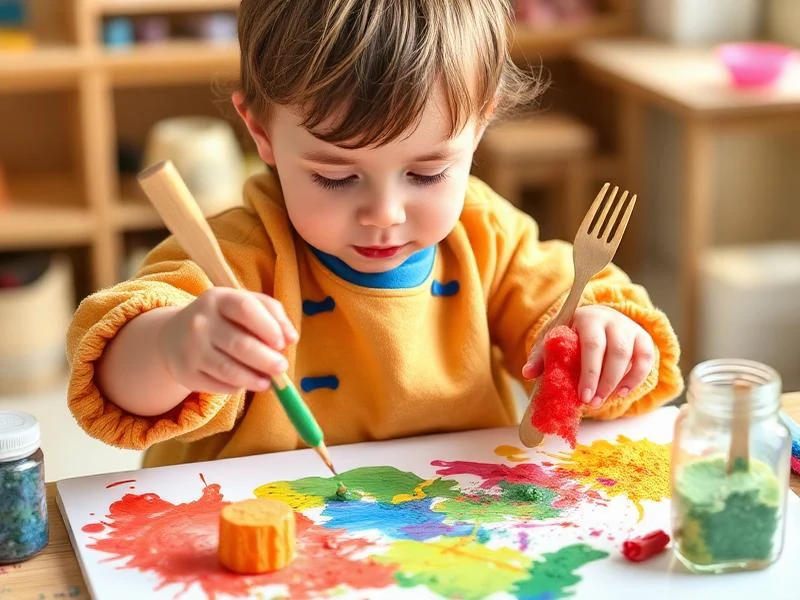
Painting with Unusual Tools
Compare marks made with age-labeled washable paint, a large intact sponge, and an age-labeled paintbrush.
Materials Needed:
- Age-labeled washable paint
- Large paper
- Large intact sponge
- Age-labeled paintbrush
Safety Note
Paint is not food, even when labeled non-toxic. Use tools labeled for the child's age, keep them away from mouths, and supervise closely. Do not use sharp or detachable tools.
Parent Tip
Offer one tool at a time and describe the visible marks without promising a developmental benefit.
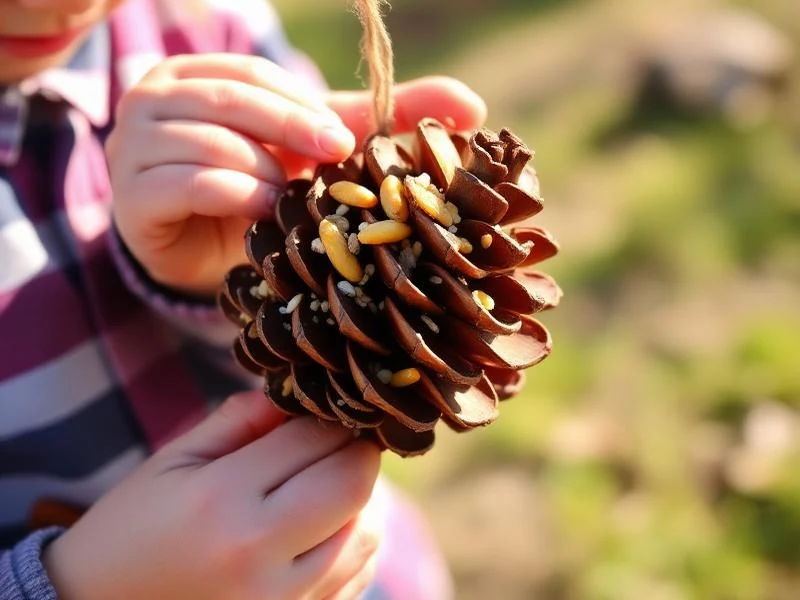
Pinecone Bird Feeders
With adult-led preparation, coat a pinecone with a spread and birdseed, then observe from a distance to see whether birds visit.
Materials Needed:
- Large pinecone
- Spread checked for allergies and cross-contact
- Birdseed with ingredients checked
- Short cord handled by an adult
Safety Note
Check with the child's caregiver and product labels for allergies and cross-contact; do not assume a substitute is safe. Keep seed away from mouths and younger siblings. An adult handles and removes the cord after use.
Parent Tip
Follow local bird-feeding guidance and wash hands after handling seed.
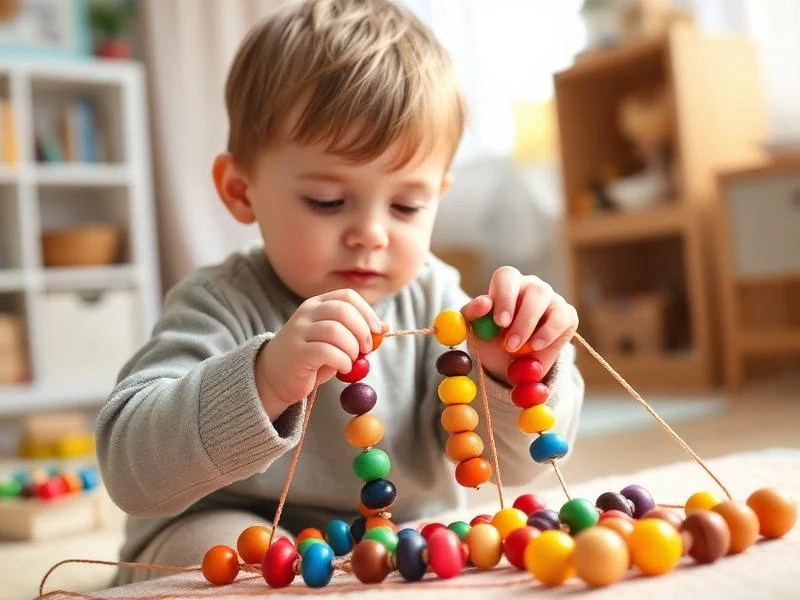
Bead Threading
Practice threading only with age-labeled materials, continuous supervision, and a child who does not mouth objects.
Materials Needed:
- Age-labeled lacing board or threading set
Safety Note
Small loose pieces can pose choking risks. Skip if the child mouths objects, supervise continuously, keep materials away from younger siblings, and store them out of reach. Do not make wearable necklaces or put cord around the child's neck.
Parent Tip
Use the threading set as supplied and follow its age label; avoid exposed wire and wearable cord.
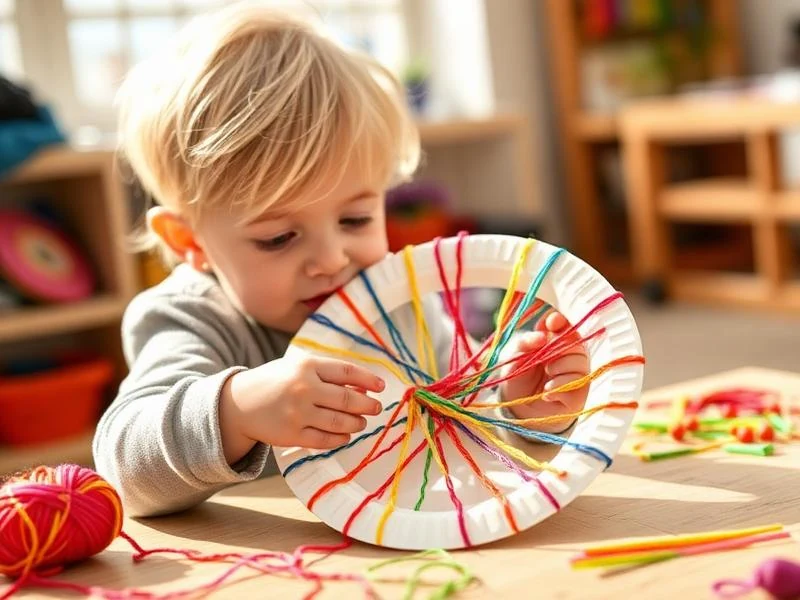
Simple Weaving
Weave strips of paper through a paper plate loom.
Materials Needed:
- Paper plate with adult-cut slits
- Wide paper strips
- Age-labeled crayons (optional)
Safety Note
An adult cuts the paper-plate loom and puts scissors away first. Use wide paper strips only; avoid yarn, cord, needles, wire, pipe cleaners, small beads, and loose decorations. Supervise and keep paper away from mouths.
Parent Tip
Use two colors to help child see the over-under pattern clearly.
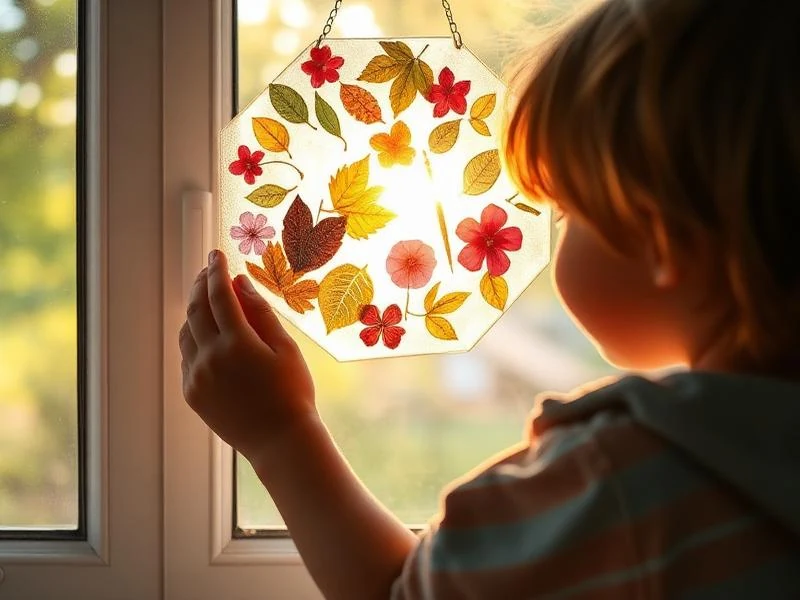
Nature Suncatcher
Seal one adult-screened leaf or a broad tissue-paper sheet between contact paper, then display it out of reach.
Materials Needed:
- Clear contact paper
- One adult-screened leaf or broad tissue-paper sheet
- Adult-applied tape
Safety Note
An adult handles adhesive, plant selection, cutting, and display. Skip natural materials if mouthing cannot be prevented; do not add cords or small loose scraps.
Parent Tip
Use a broad tissue-paper sheet instead of collected plants when their identity or treatment is uncertain.
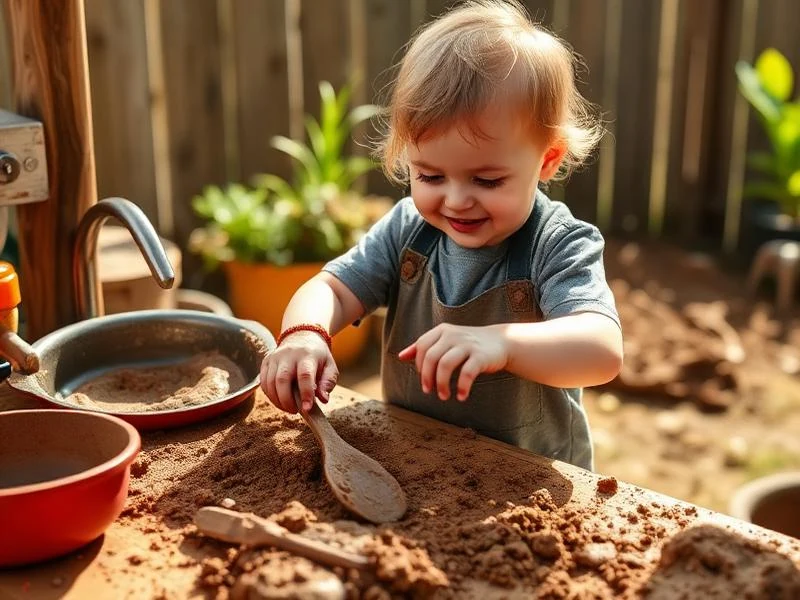
Mud Kitchen Play
Observe and stir a small amount of adult-screened soil in a stable shallow tray under continuous supervision; soil is never tasted.
Materials Needed:
- Soil from a known, suitable area
- Stable shallow tray
- Intact age-labeled outdoor-play tool
- Small adult-controlled cup of water
- Soap and running water for handwashing
Safety Note
Soil may contain contaminants or irritants that are not visible. Skip it if its source or history is unknown, near a pre-1978 painted building, or if the area has waste, mold, sharp debris, or chemical treatment. Prevent tasting, supervise continuously, and wash hands afterward.
Parent Tip
Use soil only when its source is known and suitable; keep water adult-controlled and never present mud as food.
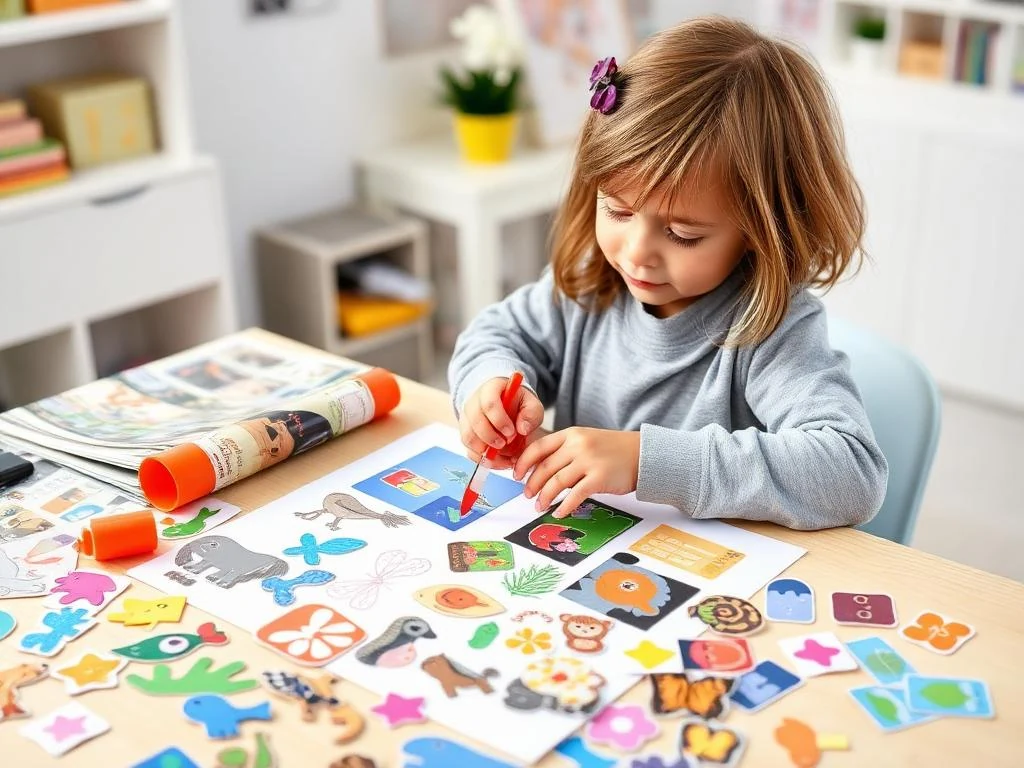
Magazine Collage Art
Cut pictures from old magazines and arrange them into creative collages.
Materials Needed:
- Old magazines
- Safety scissors
- Glue stick
- Large paper
- Crayons
Safety Note
Safety scissors only. Check magazines for inappropriate content before giving to child.
Parent Tip
Give a theme: 'Find all the animals!' or 'Let's make a food collage!'
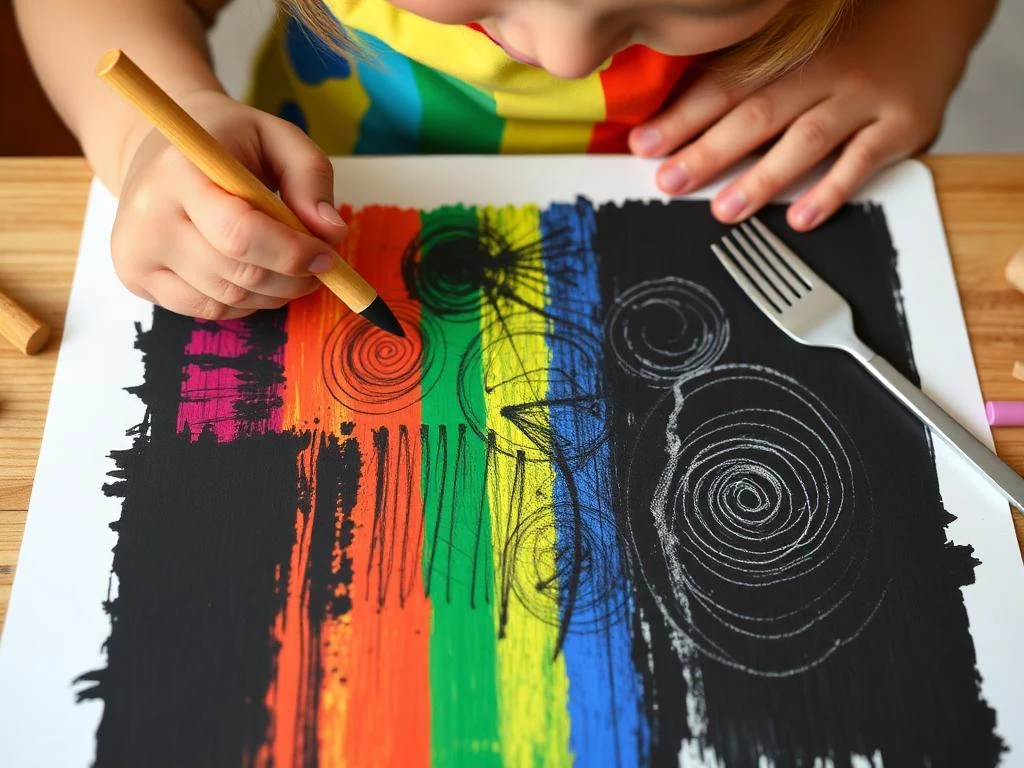
Rainbow Scratch Art
Color rainbow stripes, cover with black crayon, then scratch designs to reveal colors beneath!
Materials Needed:
- Heavy paper
- Crayons (bright colors + black)
- Plastic fork
- Newspaper
Safety Note
Use a plastic fork only; keep pointed or sharp tools away from children. Supervise throughout.
Parent Tip
The magic reveal moment is incredible - have camera ready for their reaction!
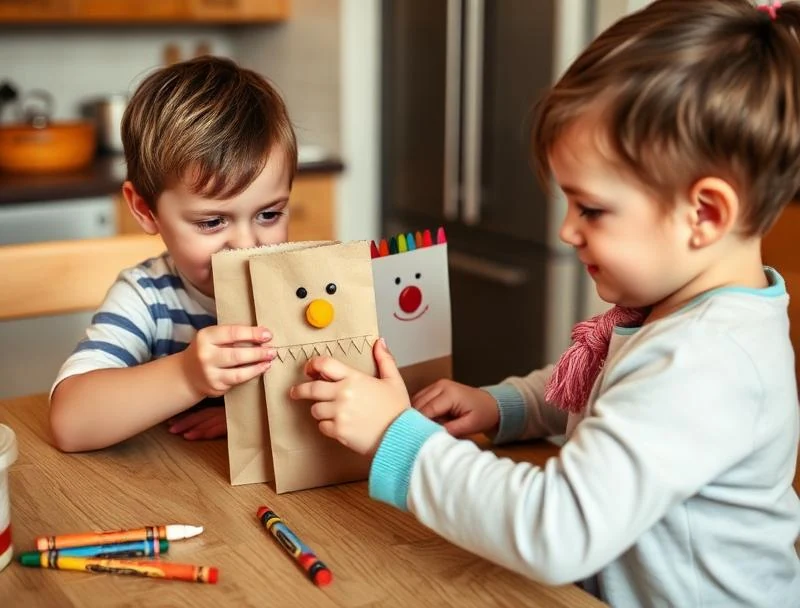
Paper Bag Puppet Show
Draw a puppet character on a paper lunch bag using age-labeled crayons or markers.
Materials Needed:
- Brown paper bag
- Age-labeled crayons or markers
Safety Note
Keep paper bags away from a child's face. Use drawn features instead of yarn or small decorations, supervise closely, and remove torn paper pieces.
Parent Tip
Keep the bag away from the child's face; an adult can hold it during a short pretend scene.
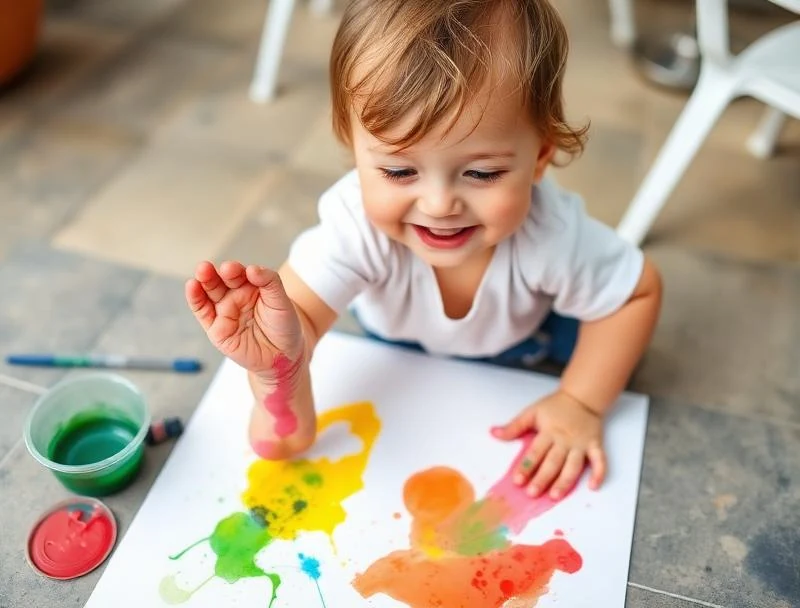
Seated Footprint Stamping
Make a footprint print while the child remains seated and an adult controls paint, paper, and cleanup.
Materials Needed:
- Skin-contact paint labeled for that use
- Large paper
- Adult-held sponge or brush
- Damp cloth and towel
- Stable seat
Safety Note
Do not have the child stand or walk in paint. Use only paint labeled for skin contact, keep the child seated, supervise closely, prevent mouthing, and wipe spills promptly. Do not use a bucket or standing water for cleanup.
Parent Tip
An adult applies and removes a small amount of skin-contact paint while the child stays seated; follow the product label.
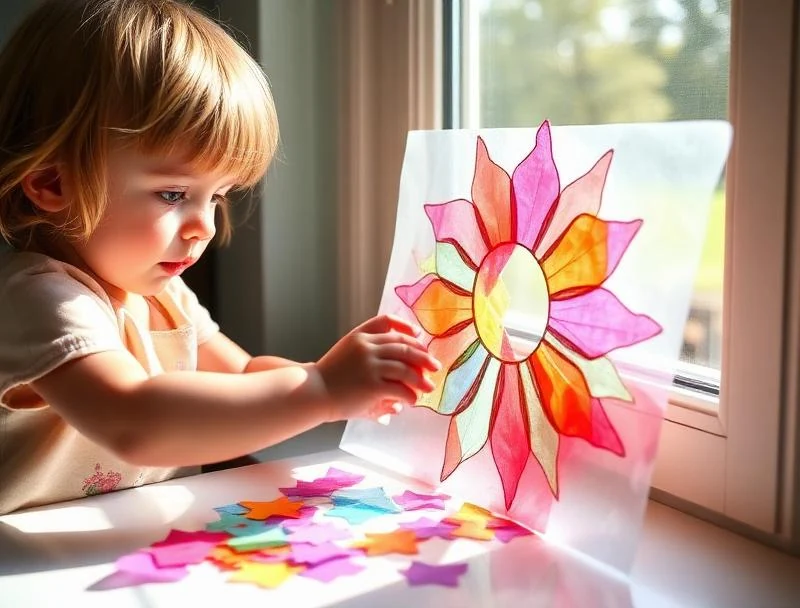
Tissue Paper Suncatcher
Layer colorful tissue paper between contact paper for glowing window art.
Materials Needed:
- Clear contact paper
- Tissue paper squares
- Scissors (adult use)
- Paper plate frame
Safety Note
An adult handles contact paper and cutting. Keep tissue paper and adhesive away from mouths, remove torn pieces, and supervise closely.
Parent Tip
Pre-cut tissue paper into small squares for easier little-finger placement.
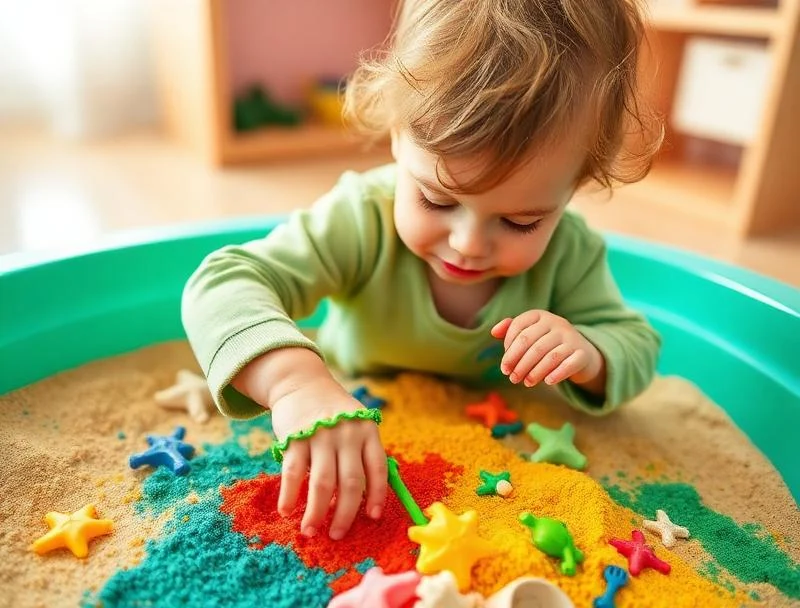
Indoor Sand Sensory Bin
Offer a contained sand activity for supervised scooping and shaping with intact, age-labeled tools.
Materials Needed:
- Play sand or kinetic sand
- Large shallow bin
- Age-labeled sand tools without detachable parts
- Dropcloth
Safety Note
Follow the product label. Do not allow tasting, throwing, or blowing sand; avoid dusty materials and small objects. Supervise continuously, keep sand away from younger siblings, and wash hands after play.
Parent Tip
Keep the bin contained and stop if the child mouths, throws, or blows sand.
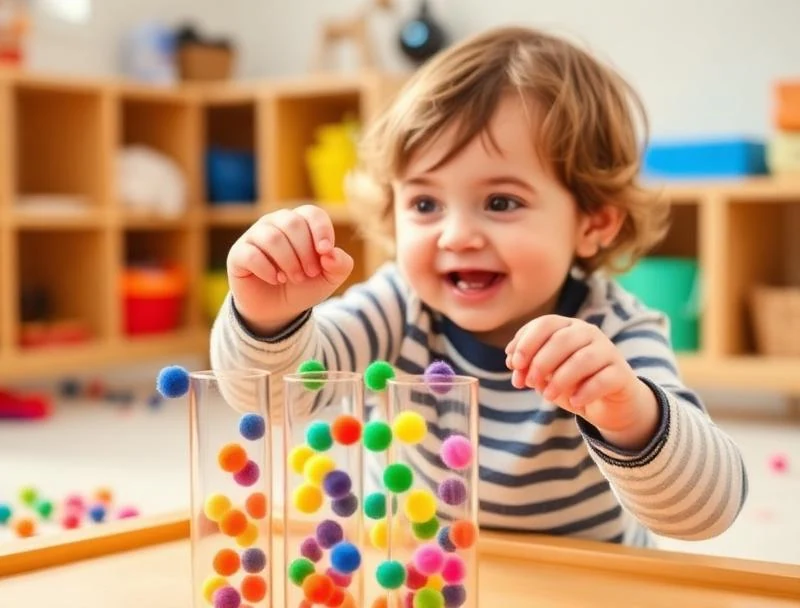
Ball Drop Activity
Drop an intact, age-labeled ball through a wide, stable opening while an adult supervises closely.
Materials Needed:
- Age-labeled ball
- Stable cardboard tube
- Open basket
Safety Note
Use only an intact toy labeled for the child's age, prevent mouthing, keep the ball away from younger children, and supervise closely. Secure tubes so they cannot fall.
Parent Tip
Keep the setup on a stable surface and put the ball away after play.