Colored Pasta Sensory Play
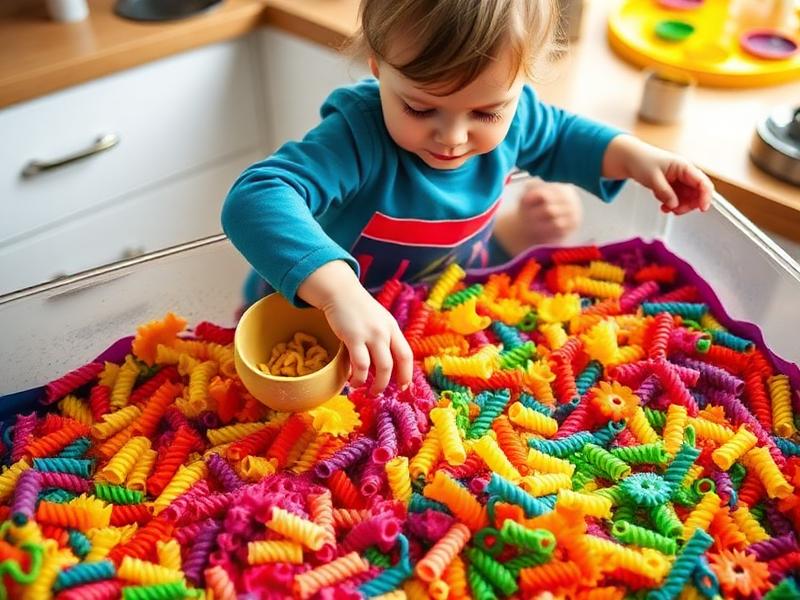
Rainbow pasta is one of those activities that looks Pinterest-perfect but is actually incredibly practical. Unlike dyed rice, pasta is large enough that mouthing isn't a major choking concern—wagon wheels and rigatoni are substantial shapes that can't be swallowed easily. When my son was 16 months old, he'd stuff fistfuls of sensory rice in his mouth before I could blink. But pasta? He'd taste it, realize it wasn't cooked, and move on to playing. That discovery felt like a sensory play breakthrough.
Age Safety Note
Use only large pasta shapes—wagon wheels, rigatoni, large shells—never small pasta like orzo or macaroni. While large pasta is safer than rice, supervision is still essential. Uncooked pasta is not meant to be eaten in quantity—discourage tasting and redirect to play. The rubbing alcohol used in dyeing evaporates completely during drying, leaving no residue.
Why This Activity Works
Pasta offers a different tactile experience than rice or sand. The shapes provide finger-grip challenges, the hollow centers are perfect for hiding or threading, and the colors stimulate visual engagement. Scooping and pouring pasta builds hand-eye coordination and transfers skills. The larger pieces make it easier for young toddlers to pick up individual pieces—great for developing the pincer grasp.
Materials Needed
- Large pasta shapes
Wagon wheels, rigatoni, large shells, or bow-ties work best. Avoid small pasta.
- Rubbing alcohol
A tablespoon per color. Helps color adhere and evaporates during drying.
- Food coloring
Gel colors are more vibrant than liquid. Neon colors are particularly fun.
- Ziplock bags
One per color for dyeing.
- Baking sheet and parchment
For drying the pasta after dyeing.
- Shallow bin
For play. Add scoops, cups, and containers.
Prep Tips (Before You Start)
- 1Add pasta to a ziplock bag with a few drops of food coloring and a splash of rubbing alcohol.
- 2Seal bag and shake vigorously until pasta is evenly coated.
- 3Spread on parchment-lined baking sheet to dry completely—at least 2-3 hours or overnight.
- 4Stir occasionally during drying to prevent sticking.
- 5Store dried pasta in airtight containers—it lasts for months.
Step-by-Step Guide
- 1Present the colored pasta bin with a few simple tools—start with one or two cups and a scoop.
- 2Let your child explore freely. Observe without directing.
- 3If they taste it, calmly say 'That's for playing, not eating' and redirect to scooping.
- 4Introduce new tools gradually: muffin tin for sorting, funnel for pouring, containers with lids for shake-and-listen.
- 5Create simple games: 'Can you put all the purple pasta in this cup?'
- 6When play winds down, practice cleanup by having your child help scoop pasta back into the bin.
Fun Variations to Try
- •Add themed toys: dinosaurs, farm animals, or toy cars for imaginative play.
- •Create a 'pasta dig' by burying treasures for discovery.
- •Mix different pasta shapes for varied textures and sounds.
- •For older toddlers, add child-safe tweezers for fine motor transfer activities.
Cleanup Tips
- Store pasta in airtight containers between uses—it lasts 6+ months.
- Vacuum or sweep stray pasta from the floor.
- Pasta can be composted when you're done with it.
- If pasta gets wet during play, spread to dry or replace—wet pasta molds.
Real Parent Story
"Wyatt is what the parenting books politely call 'oral sensory seeking.' Translation: he eats everything. Every sensory bin I tried ended with me fishing materials out of his mouth. I'd almost given up on sensory play entirely when a friend suggested pasta. 'It's too big to swallow,' she said. Skeptical, I tried it. And she was RIGHT. Wyatt picked up a piece of rigatoni, inspected it, put it in his mouth, felt that it wasn't the cooked pasta he knows and loves, and took it OUT. Then he started playing. Actually playing! For fifteen solid minutes, he scooped and poured and stirred without eating a single piece. I nearly cried. We've done the pasta bin probably thirty times since then. It's our reliable, safe, satisfying sensory activity. The pasta has faded slightly from all the handling, but Wyatt doesn't care. To him, it's treasure."
— Dana, mom of 15-month-old Wyatt
Bonus Tips From Parents
- Refresh faded colors by adding more dyed pasta to the mix.
- If your child isn't interested, try hiding small toys in the pasta for discovery.
- Pasta makes great noise in containers—shaking is half the fun.
- Let your child help dye the pasta—shaking the bag is a great activity in itself.
References & Further Reading
General guidance we rely on when writing activities. These are broad resources rather than sources for this specific craft.
Toddler Ages & Stages
American Academy of Pediatrics
What to expect physically, socially and cognitively from 1 to 3 years.
The Power of Play
American Academy of Pediatrics
Why unstructured, hands-on play matters more than structured lessons at this age.
Choking Prevention
American Academy of Pediatrics
How to judge whether an object is a choking risk, and what to do if it happens.
Art Material Safety & the AP Seal
Art & Creative Materials Institute
Look up which craft supplies are certified non-toxic for children.
Toddler Play & Learning
Raising Children Network
Evidence-based play ideas grouped by developmental skill.
Poison Control
America's Poison Centers
Free 24/7 guidance if your child swallows something they shouldn't.
Ready for more fun?