Cotton Ball Painting
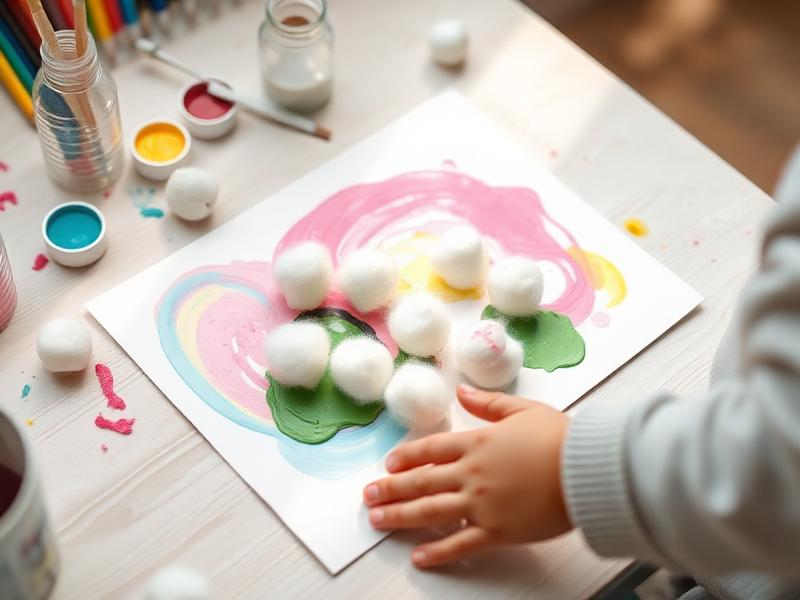
When my daughter was about 18 months old, she desperately wanted to paint like her older brother. But she couldn't grip a paintbrush properly, and her attempts ended in frustration and tears. Then I had a brilliant idea: clip cotton balls to clothespins. Suddenly she had a painting tool with a fat, easy-to-grip handle and a soft, forgiving tip. Her first cotton ball painting was a glorious mess of dabbed colors, and she was SO proud of herself. That painting still hangs in our hallway.
Age Safety Note
Cotton balls can be a choking hazard if put in the mouth. Supervise closely and remove any cotton balls that become saturated and start falling apart. The clothespin-cotton ball combo is safer than loose cotton balls since it's harder to put the whole thing in the mouth. Use only washable, non-toxic paints. If your child is still mouthing everything, consider paint alternatives like yogurt with food coloring.
Why This Activity Works
Cotton ball painting solves a major problem for young toddlers: paintbrushes are hard to control. The chunky clothespin handle is perfect for developing grips, and the soft cotton ball tip forgives imprecise movements. The dabbing motion is also easier than the sweeping motion required for brushes. This activity builds pre-writing grip strength while allowing creative expression. The soft texture of cotton adds a sensory dimension that regular brushes lack.
Materials Needed
- Cotton balls
Regular size works best. Giant cotton balls are fun but use more paint.
- Clothespins
Standard wooden spring clothespins grip cotton balls perfectly.
- Washable paint
Pour small amounts onto paper plates for easy dipping.
- Thick paper
Cardstock or heavy construction paper handles the wet dabbing better than thin paper.
- Smock or old shirt
This gets messy. Protect clothing.
Prep Tips (Before You Start)
- 1Clip cotton balls into clothespins before starting—have 4-5 ready to go.
- 2Pour each paint color onto its own paper plate. Less is more—you can always add.
- 3Tape paper to the table so it doesn't slide around during enthusiastic dabbing.
- 4Cover the work area with newspaper or a plastic tablecloth.
- 5Have wet paper towels ready for paint-covered fingers that want to touch faces.
Step-by-Step Guide
- 1Show your child how to hold the clothespin and dip the cotton ball in paint.
- 2Demonstrate dabbing on the paper: 'Dab, dab, dab! Look at the dots!'
- 3Hand over the tool and let your child take over. Resist the urge to guide their hand.
- 4Offer different colors by presenting new paint plates. 'Do you want to try red?'
- 5When a cotton ball gets too saturated, unclip and add a fresh one. Make it part of the game: 'This one is full! Let's give it a new fluffy one!'
- 6Praise the process, not the product: 'You're working so hard! Look at all those colors!'
- 7When finished, set the painting aside to dry and admire it together.
Fun Variations to Try
- •Use different sizes of cotton balls for varied textures.
- •Try cotton swabs (Q-tips) for finer detail work with older toddlers.
- •Dab cotton balls in water first for a watercolor effect.
- •Make prints by pressing painted cotton balls onto paper rather than dabbing.
Cleanup Tips
- Throw used cotton balls in the trash—they don't wash and reuse well.
- Clothespins wipe clean with a damp cloth and can be reused indefinitely.
- Washable paint comes off skin easily with soap and water.
- Let paper plates dry and throw away, or soak briefly to release dried paint before recycling.
Real Parent Story
"Leo's older sister is an artist in the making—she paints almost every day. Leo would watch her with such longing, reaching for her brushes and crying when he couldn't make them work. The first time I gave him a cotton ball on a clothespin, his face lit up. He got it immediately: grip, dip, dab. His paintings look completely different from his sister's brush strokes—his are all dots and dabs, impressionistic little masterpieces. We've started framing them and hanging them next to his sister's work. Now they 'paint together' at the kitchen table, each with their preferred tools, both equally proud of their creations. Leo learned that art doesn't require perfect technique—it just requires making marks that make you happy. That's a life lesson wrapped in a craft activity."
— Kristina, mom of 19-month-old Leo
Bonus Tips From Parents
- Let your child choose the colors, even if the combination seems odd to you.
- Cotton ball paintings make great cards for grandparents—fold paper in half before painting.
- If your child wants to eat the cotton ball, switch to marshmallows dipped in yogurt paint.
- Save a few paintings in a portfolio—you'll love looking back at these early artworks.
References & Further Reading
General guidance we rely on when writing activities. These are broad resources rather than sources for this specific craft.
Toddler Ages & Stages
American Academy of Pediatrics
What to expect physically, socially and cognitively from 1 to 3 years.
The Power of Play
American Academy of Pediatrics
Why unstructured, hands-on play matters more than structured lessons at this age.
Choking Prevention
American Academy of Pediatrics
How to judge whether an object is a choking risk, and what to do if it happens.
Art Material Safety & the AP Seal
Art & Creative Materials Institute
Look up which craft supplies are certified non-toxic for children.
Toddler Play & Learning
Raising Children Network
Evidence-based play ideas grouped by developmental skill.
Poison Control
America's Poison Centers
Free 24/7 guidance if your child swallows something they shouldn't.
Ready for more fun?