Discovery Basket Exploration
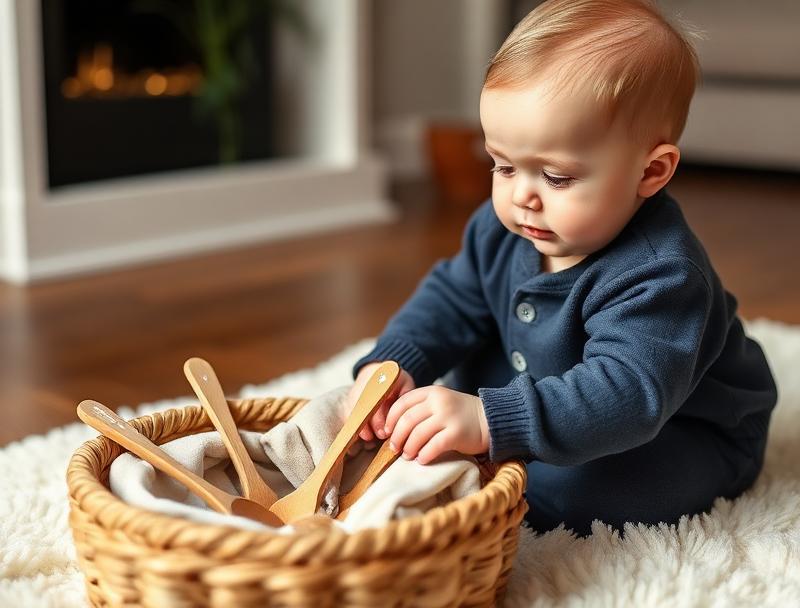
When my daughter was about 10 months old, she became obsessed with emptying my kitchen drawers. Everything I owned ended up on the floor daily. Instead of fighting this developmental urge, I channeled it. I filled a wicker basket with safe, interesting household objects—wooden spoons, fabric scraps, metal measuring cups, a natural sponge—and placed it where she could always find it. That basket became her favorite 'toy' for months. She'd dump it, sort through items, examine each one, and dump it again. The discovery basket is a Montessori-inspired classic that costs almost nothing and entertains endlessly.
Age Safety Note
Every item in a discovery basket must pass the toilet paper roll test: if it fits through a toilet paper roll, it's a choking hazard and shouldn't be included. Check items for loose parts, sharp edges, or paint that might chip. Rotate contents regularly, inspecting each item for wear. Natural materials like wood and fabric are generally safer than plastic, which can crack into sharp pieces. Always supervise—even 'safe' items can be used in unexpected ways that require adult intervention.
Why This Activity Works
Discovery baskets tap into babies' natural urge to explore objects using all their senses. At 12-24 months, children learn primarily through touching, mouthing, banging, and manipulating. Real household objects are more interesting than plastic toys because they have varied textures, weights, temperatures, and sounds. The open-ended nature of a discovery basket allows babies to direct their own learning—they choose what to explore and for how long. This builds focus, decision-making, and a sense of competence. Plus, the familiarity of 'mom's kitchen things' is comforting and encourages interaction.
Materials Needed
- Wicker or fabric basket
Large enough to hold 8-12 items, with low sides for easy access. The basket itself is part of the sensory experience.
- Wooden items
Spoons, small bowls, chunky napkin rings, egg cups. Wood is warm and smooth.
- Metal items
Measuring spoons, small whisks, metal bowls. Cool to touch and make sounds when banged.
- Fabric items
Silk scarves, crocheted dishcloths, velvet scraps. Various textures for tactile exploration.
- Natural items
Loofah, natural sponge, large pinecone (checked for loose pieces), big shells.
Prep Tips (Before You Start)
- 1Gather 8-12 items—not so few that it's boring, not so many that it's overwhelming.
- 2Include variety: different textures, weights, temperatures, and sounds.
- 3Check every item for safety before each use. Things wear out and become hazardous over time.
- 4Place the basket where baby can access it independently—low shelf, floor, bottom of toy bin.
- 5Rotate items weekly to maintain novelty. Store extras and swap them in.
Step-by-Step Guide
- 1Present the basket with genuine excitement: 'Look at your basket! Let's see what's inside today!'
- 2Let baby take the lead. Sit nearby but don't direct the play.
- 3Narrate what you observe: 'You found the wooden spoon! Feel how smooth it is. You're tapping it—what a nice sound!'
- 4Model curiosity when it's your turn: pick up an item and examine it theatrically before returning it to the basket.
- 5If baby mouths items (they will), stay calm. You chose safe objects for exactly this reason.
- 6When baby loses interest, don't extend the activity. Put the basket away for next time.
- 7Between sessions, check items for wear, wash fabric pieces, and rotate contents to keep it fresh.
Fun Variations to Try
- •Create themed baskets: kitchen items, bathroom items, outdoor items (after thorough cleaning).
- •Make a sound basket where every item makes a different noise when shaken, tapped, or crinkled.
- •Create a texture basket focused solely on different feels: fuzzy, smooth, rough, squishy.
- •As baby grows, add items that relate: a wooden egg with an egg cup, a small brush with a bowl.
Cleanup Tips
- Store the basket where baby can access it independently—the activity should be baby-initiated, not parent-led.
- Wash fabric items weekly; wipe hard items with a damp cloth.
- When items become worn, damaged, or too small (baby has grown!), replace them.
- Keep a 'rotation box' of extra items to swap in, maintaining novelty without constant shopping.
Real Parent Story
"I was skeptical when I first read about discovery baskets. How could a bunch of kitchen items compete with the colorful, musical toys we'd been given? But we were drowning in plastic, and Zara seemed bored with everything anyway. I gathered a small wicker basket and filled it with: a wooden honey dipper, a silk scarf, a metal measuring cup, a soft scrub brush, and a large shell from our last beach trip. I placed it on her play mat and sat back to watch. She was completely entranced. She picked up the honey dipper and turned it over and over, examining the ridges. She draped the silk scarf over her head and laughed when it fell off. She banged the measuring cup on the floor and listened to the sound. For three weeks now, this basket has been her favorite thing. She crawls to it first thing every morning. I've rotated items twice, and each change reignites her interest. I feel like I finally understand what 'child-led learning' means. I'm not directing anything; I'm just providing interesting materials and letting her curiosity do the rest. It's a shift in parenting philosophy that has made both of us calmer and happier."
— Aisha, mom of 15-month-old Zara
Bonus Tips From Parents
- The basket itself matters—wicker provides texture and that satisfying crinkle sound.
- Resist the urge to add too much. Quality and variety beat quantity every time.
- Notice which items baby returns to again and again—this tells you what sensory inputs they're craving.
- Take pictures of baby exploring items. These candid shots are often the best photos you'll get.
References & Further Reading
General guidance we rely on when writing activities. These are broad resources rather than sources for this specific craft.
Toddler Ages & Stages
American Academy of Pediatrics
What to expect physically, socially and cognitively from 1 to 3 years.
The Power of Play
American Academy of Pediatrics
Why unstructured, hands-on play matters more than structured lessons at this age.
Choking Prevention
American Academy of Pediatrics
How to judge whether an object is a choking risk, and what to do if it happens.
Art Material Safety & the AP Seal
Art & Creative Materials Institute
Look up which craft supplies are certified non-toxic for children.
Toddler Play & Learning
Raising Children Network
Evidence-based play ideas grouped by developmental skill.
Poison Control
America's Poison Centers
Free 24/7 guidance if your child swallows something they shouldn't.
Ready for more fun?