Fruit Stamping Art
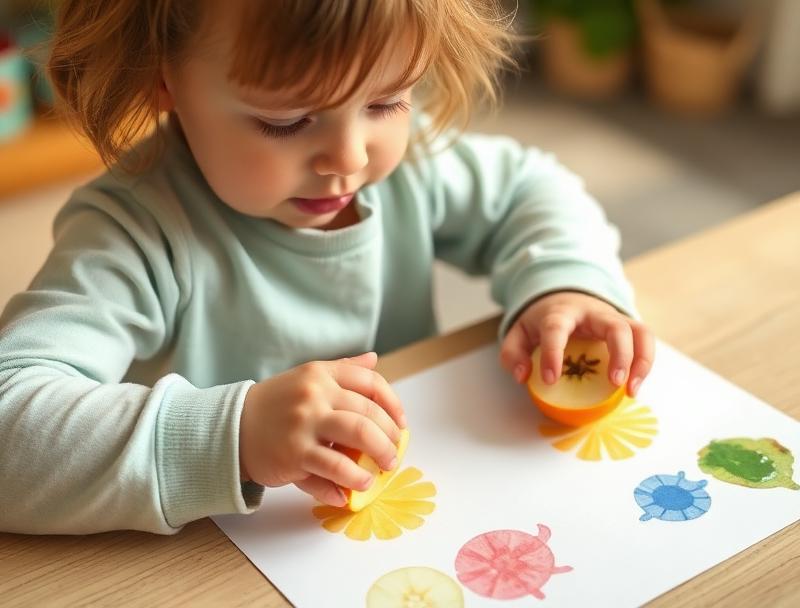
The first time I cut an apple in half and showed my daughter the star pattern hiding inside, her eyes went wide with wonder. 'A STAR, Mama!' she shouted, pointing at the seed pattern in the center. That discovery became the foundation for one of our favorite sensory art activities. Fruit stamping combines the natural beauty of produce with the joy of making marks on paper. Every stamp is unique, just like every piece of fruit, and the resulting artwork looks almost professional—which is saying something when your artist is eighteen months old and just figuring out how to hold things.
Age Safety Note
For babies 12-24 months, the biggest consideration is that fruit looks delicious and smells delicious—because it IS delicious. Your little one will absolutely try to eat the stamping materials, which is why I recommend using edible finger paints made from yogurt and food coloring for the youngest stampers. Commercial non-toxic paints are fine for toddlers who no longer mouth everything, but always supervise closely. The fruit itself is slippery when wet with paint, so hold the baby's hand to prevent the apple from shooting across the table (learned that one the hard way).
Why This Activity Works
Fruit stamping teaches cause and effect in a visceral, satisfying way. Baby presses apple down, lifts apple up, sees apple shape on paper. The connection between action and result is immediate and clear. The different textures and shapes of various fruits introduce early concepts of comparison and categorization. An apple cut crosswise shows a star; cut lengthwise shows an oval. An orange makes a circle with lines. A celery stalk makes a rose shape! These discoveries feel magical to young minds just beginning to understand how the world works.
Materials Needed
- Firm fruits
Apples, oranges, lemons, and pears work beautifully. Softer fruits like bananas are too mushy for clear prints.
- Non-toxic washable paint
Or make edible paint from yogurt mixed with food coloring for babies who still mouth objects.
- Large paper
Butcher paper or large poster board provides lots of stamping room.
- Paper plates
For holding thin layers of paint. Shallow is better than deep.
- High chair or booster seat
Keeps baby contained and at the right height for the table.
Prep Tips (Before You Start)
- 1Cut fruits in half right before the activity—they brown quickly once exposed to air.
- 2Pour thin layers of paint onto paper plates. Too much paint makes blobby prints.
- 3Tape the paper to the table or high chair tray so it doesn't slide during stamping.
- 4Dress baby in just a diaper or old clothes. This will get messy!
- 5Have a damp cloth ready for immediate hand and face wipe-downs.
Step-by-Step Guide
- 1Show your baby the whole fruit first. 'This is an apple! It's red and round. Want to see what's inside?'
- 2Cut the fruit in half and show them the inside. Point out patterns, seeds, and colors.
- 3Dip the cut side of the fruit into paint, demonstrating the 'dip' motion.
- 4Press the fruit firmly onto paper. Lift straight up to reveal the print. 'Look! The apple made a picture!'
- 5Hand the fruit to your baby (or guide their hand while they hold it) and encourage them to try.
- 6Celebrate every stamp! 'You made a beautiful apple print! The star pattern showed up!'
- 7Try different fruits for different patterns. Compare the prints. 'The orange made a circle!'
- 8When interest fades, transition to cleanup. Those painted hands need washing!
Fun Variations to Try
- •Use vegetables too: celery stalks make rose patterns, bell peppers make flower shapes, corn on the cob makes texture prints.
- •Stamp on fabric with fabric paint for custom bibs, onesies, or tea towels.
- •Create wrapping paper by stamping on brown craft paper with metallic paints.
- •Make pattern sequences: apple, orange, apple, orange—introducing early math concepts.
Cleanup Tips
- Compost used fruit after the activity—it's not safe to eat after being in paint.
- Wash hands immediately to prevent paint from drying on skin.
- Paper plates with paint can go in the trash or recycling depending on paint type.
- Lay finished artwork flat to dry; stamp prints take longer to dry than brush paintings.
Real Parent Story
"Oliver wasn't walking yet when we did our first fruit stamping session. I strapped him into his high chair, cut an apple in half, and dipped it in yellow paint. The moment he pressed that apple to the paper and saw the print appear, his whole face lit up. He looked at me, looked at the apple, looked at the paper, and then—carefully, deliberately—pressed again. He understood cause and effect in that moment, and I could SEE him understanding it. We stamped for twenty minutes, which is an eternity in baby attention spans. When we finished, our paper was covered in wobbly yellow and orange prints. I framed it and it's hanging in our kitchen. My mother-in-law asked where we bought it, assuming it was 'art.' I told her my baby made it with breakfast fruit. She didn't believe me until I showed her the video. That piece of 'art' still makes me proud every time I see it—proud of Oliver for learning, and proud of myself for setting up the activity instead of just plopping him in front of a screen."
— Jen, mom of 14-month-old Oliver
Bonus Tips From Parents
- The 'star' pattern only appears when you cut the apple crosswise (across the middle), not lengthwise.
- Slightly dried-out lemons and oranges actually stamp better because they're less juicy.
- Let baby explore the fruit with clean hands first—the sensory experience is part of the learning.
- Consider this activity for holiday cards: apple prints in red and green, orange circles as ornaments.
References & Further Reading
General guidance we rely on when writing activities. These are broad resources rather than sources for this specific craft.
Toddler Ages & Stages
American Academy of Pediatrics
What to expect physically, socially and cognitively from 1 to 3 years.
The Power of Play
American Academy of Pediatrics
Why unstructured, hands-on play matters more than structured lessons at this age.
Choking Prevention
American Academy of Pediatrics
How to judge whether an object is a choking risk, and what to do if it happens.
Art Material Safety & the AP Seal
Art & Creative Materials Institute
Look up which craft supplies are certified non-toxic for children.
Toddler Play & Learning
Raising Children Network
Evidence-based play ideas grouped by developmental skill.
Poison Control
America's Poison Centers
Free 24/7 guidance if your child swallows something they shouldn't.
Ready for more fun?