Painting with Unusual Tools
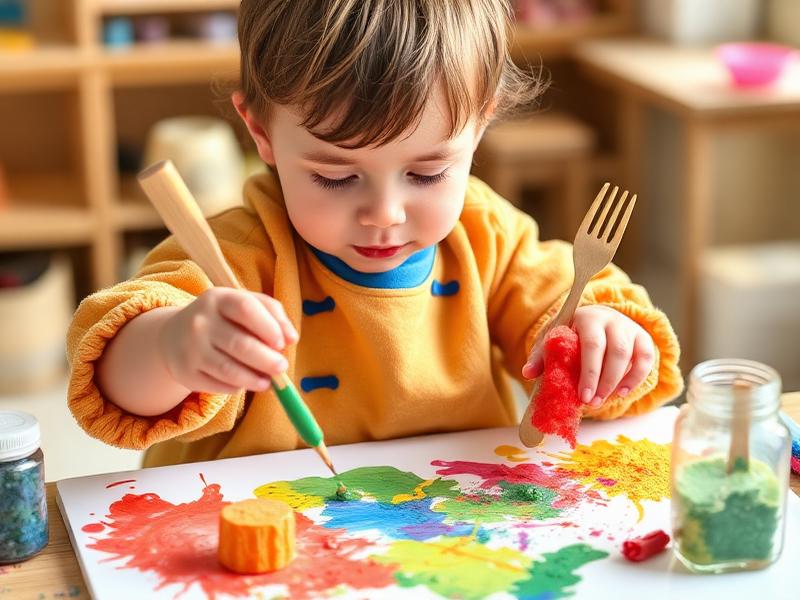
Brushes are just the beginning. We've painted with sponges, cotton balls, forks, potato mashers, leaves, feathers, toy cars, and once—memorably—with my daughter's feet attached to toy trucks. Painting with unusual tools transforms a standard art activity into an experiment. What patterns does this thing make? What happens if I drag it? Stamp it? Roll it? The discoveries are endless, and the artwork is always surprising. Some of our most beautiful pieces came from the most random tools.
Age Safety Note
All paints must be non-toxic and washable. Check tools for sharp edges or small parts that could break off. Kitchen tools should be cleaned before and after use. Some tools may splash paint unexpectedly—protective clothing is essential. Supervise closely when using tools with prongs or points (like forks).
Why This Activity Works
Using unconventional tools develops creative thinking and problem-solving. Children learn that materials can have multiple uses, building flexible thinking patterns. Different tools require different grips and movements, developing varied motor skills. And the element of experimentation—wondering what each tool will do—builds scientific thinking habits. When there's no 'right' way to use a tool, children feel free to explore.
Materials Needed
- Washable paint
Multiple colors in shallow containers or plates for dipping.
- Large paper
Big paper gives room for exploration with oversized tools.
- Unusual painting tools
Sponges, cotton balls, bubble wrap, forks, feathers, leaves, toy cars—anything!
- Smock or old clothes
This gets messy. Embrace it.
Prep Tips (Before You Start)
- 1Gather 5-6 unusual tools for variety.
- 2Pour paint into shallow containers or paper plates for easy tool dipping.
- 3Cover the work surface and floor—paint gets everywhere with experimental tools.
- 4Dress child in painting clothes or a smock.
- 5Have paper towels ready for tool switching between colors.
Step-by-Step Guide
- 1Spread out paper and paint containers.
- 2Present the unusual tools. 'These aren't brushes, but we can paint with them!'
- 3Let child explore: 'What do you think this sponge will do?'
- 4Dip tools in paint and experiment: stamp, drag, roll, press.
- 5Discuss discoveries: 'Look at the pattern the fork made!'
- 6Encourage trying each tool. 'What does the feather do?'
- 7Allow mixing techniques—drag then stamp, roll then press.
- 8When exploration winds down, discuss favorites: 'Which tool made your favorite marks?'
Fun Variations to Try
- •Have a 'tool mystery bag'—reach in, pull out a tool, paint with it.
- •Focus on one tool type: all kitchen tools, all nature items, all toys.
- •Create a tool comparison chart: which makes thin lines? thick? circles?
- •Make collaborative art where each family member uses a different tool.
Cleanup Tips
- Wash tools immediately—dried paint is harder to remove.
- Some tools are disposable (cotton balls, leaves); others go in the dishwasher.
- Wipe down table and floor while paint is still wet.
- Take a photo of the artwork with the tools that made it for future reference.
Real Parent Story
"Sofia was bored with brushes. Every painting session ended after five minutes because she'd 'run out of ideas.' I started raiding the kitchen. Fork painting. Potato masher art. She was intrigued. Then I handed her a toilet plunger (clean, obviously). Her eyes went wide. 'Can I really paint with THIS?' She made perfect circles, over and over, laughing every time. The plunger painting is her masterpiece. It hangs in our entryway, and she tells everyone about it. 'I made that with a PLUNGER!' Painting with unusual tools rekindled her love of art. Now when we paint, she runs around the house first, gathering items to experiment with. Last week she painted with a comb, a colander, and my slipper. Everything is a potential art tool. The creativity that opened up in her is worth the mess and the paint-stained slipper."
— Carlos, dad of 3.5-year-old Sofia
Bonus Tips From Parents
- Rubber bands wrapped around objects create interesting textures.
- Rolling tools through paint (toy cars, rolling pins) make unexpected patterns.
- Natural items like leaves and pinecones make beautiful prints.
- The weirder the tool, the more excited kids get—embrace strange choices!
References & Further Reading
General guidance we rely on when writing activities. These are broad resources rather than sources for this specific craft.
Toddler Ages & Stages
American Academy of Pediatrics
What to expect physically, socially and cognitively from 1 to 3 years.
The Power of Play
American Academy of Pediatrics
Why unstructured, hands-on play matters more than structured lessons at this age.
Choking Prevention
American Academy of Pediatrics
How to judge whether an object is a choking risk, and what to do if it happens.
Art Material Safety & the AP Seal
Art & Creative Materials Institute
Look up which craft supplies are certified non-toxic for children.
Toddler Play & Learning
Raising Children Network
Evidence-based play ideas grouped by developmental skill.
Poison Control
America's Poison Centers
Free 24/7 guidance if your child swallows something they shouldn't.
Ready for more fun?