Playdough Shapes
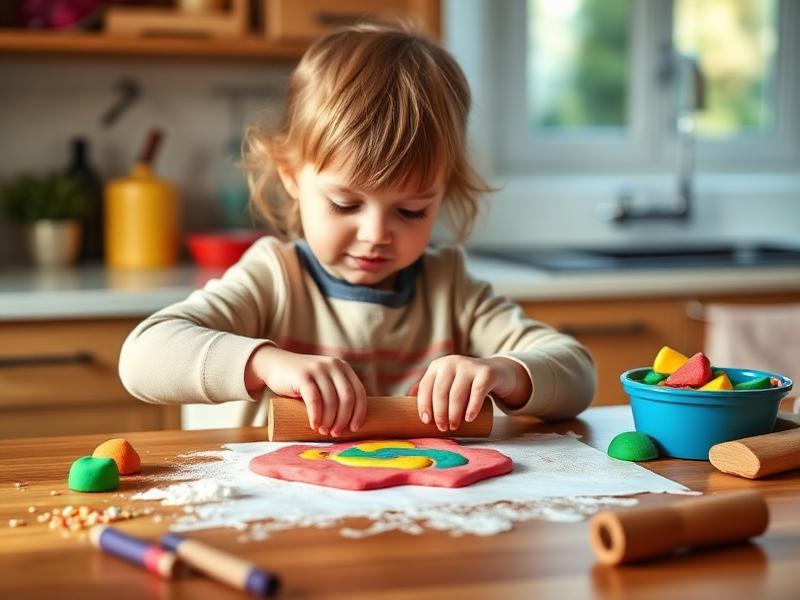
Our playdough lives in a purple container in the kitchen, and my son knows exactly where it is. 'Play-DOH? Play-DOH please?' is often the first thing he says in the morning. We've made cookies, snakes, birthday cakes, pizza, snowmen, and things I can't identify but he insists are 'definitely dragons.' The best part of homemade playdough is that when he inevitably tastes it, I don't panic—it's just flour, salt, and food coloring. The salty taste usually stops the eating experiment pretty quickly.
Age Safety Note
Homemade playdough is wonderfully safe for 2-3 year olds, but there are a few things to know. The dough is non-toxic but very salty—most toddlers taste it once, make a face, and don't try again. If your child has a wheat allergy, rice flour works as a substitute. Cookie cutters should have rounded edges; avoid sharp metal cutters for this age group. Supervise any tools and don't add small decorations (beads, buttons) that could be choking hazards.
Why This Activity Works
Playdough is an open-ended, process-focused activity that hits nearly every developmental target for 2-3 year olds. Squishing strengthens hand muscles needed for writing. Rolling builds bilateral coordination. Making 'snakes' teaches about length; making 'pancakes' teaches about flat versus round. And because there's no 'right' answer—no model to copy, no goal to reach—children experience pure creative freedom and build confidence in their own ideas. Many occupational therapists recommend playdough as a top fine motor activity for this age.
Materials Needed
- Homemade playdough
Recipe: 1 cup flour, 1/2 cup salt, 2 tbsp cream of tartar, 1 cup water, 1 tbsp oil, food coloring. Cook and stir until it forms a ball.
- Rolling pin
Child-sized wooden ones are perfect, or use a smooth water bottle.
- Cookie cutters
Plastic or dull metal with rounded edges. Large, simple shapes are easiest.
- Plastic butter knife
For cutting lines, making patterns, or 'slicing' pretend food.
- Textured items (optional)
Forks, Lego blocks, or potato mashers for pressing patterns into flat dough.
Prep Tips (Before You Start)
- 1Make the dough ahead of time (it takes 5-10 minutes of cooking) or involve your child in the making for extra fun.
- 2Add a few drops of essential oil to make scented dough—lavender is calming, peppermint is energizing.
- 3Cover the table with a wipeable mat or plastic tablecloth. Dried playdough crumbs sweep up easily.
- 4Store dough in an airtight container. It lasts 2-3 months if kept sealed.
- 5Start with one color. Adding more is easy; subtracting is impossible once colors are mixed.
Step-by-Step Guide
- 1Put a ball of playdough in front of your child and let them explore it freely first—squishing, poking, smelling.
- 2Show them how to roll it between their palms to make a ball. Say 'Round and round!' as you roll.
- 3Demonstrate rolling on the table to make a 'snake.' Make it long. Make it short. Make it curly!
- 4Flatten a ball with the rolling pin (or your palm) to make a 'pancake.' Press cookie cutters into the flat dough.
- 5Play pretend: 'Let's make pizza! What toppings do you want?' Make little balls for pepperoni, squiggles for cheese.
- 6Use textured tools to make patterns: fork lines, Lego block impressions, spiral shapes from a screwdriver tip.
- 7Follow your child's imagination. If they say it's a dinosaur, it's a dinosaur. Celebrate every creation.
- 8When done, make cleanup part of the game: 'Can you smoosh it all back into one big ball?'
- 9Store in the airtight container, and it'll be ready for tomorrow's 'Play-DOH please!'
Fun Variations to Try
- •Add glitter to the dough for 'fairy dough' or sparkly holiday versions.
- •Hide small toys inside dough balls for a surprise excavation activity.
- •Make number or letter shapes and turn playdough time into early literacy practice.
- •Set up a pretend bakery with rolling pins, cookie cutters, and cupcake liners.
Cleanup Tips
- Dried playdough on tables scratches off easily or wipes up with a damp cloth.
- Sweep or vacuum dried bits from the floor—they don't stain.
- If colors mix into ugly brown, start fresh. Homemade dough is cheap to remake.
- Tools wash in warm soapy water or go in the dishwasher.
Real Parent Story
"Ben has been 'running a bakery' from our kitchen table for six months now. It started with a batch of homemade playdough I made on a whim. He watched me stir it on the stove, eyes wide, like I was performing magic. When it turned into a squishy ball, he gasped. Since then, playdough time is 'bakery time.' He makes 'cookies' for everyone in the family. He takes orders: 'Mommy, you want chocolate or strawberry?' He wraps the cookies in paper towels as 'packages.' Last month, he made a three-layer birthday cake (three flat circles stacked) and sang happy birthday to it. His fine motor skills have exploded—he can roll perfect little balls now, which he couldn't do three months ago. But more than the developmental stuff, it's the imaginative play that gets me. This boy creates entire worlds out of flour, salt, and food coloring. And the lavender oil I add to our dough means the whole kitchen smells peaceful during bakery time. Best $1 activity ever invented."
— Sarah, mom of 3-year-old Ben
Bonus Tips From Parents
- Cream of tartar makes the dough softer and more pliable—don't skip it!
- If dough gets dry, knead in a few drops of water or oil to revive it.
- Make different colors in separate batches to prevent immediate mixing into brown.
- Involve kids in the cooking process—stirring the pot is exciting for them!
References & Further Reading
General guidance we rely on when writing activities. These are broad resources rather than sources for this specific craft.
Toddler Ages & Stages
American Academy of Pediatrics
What to expect physically, socially and cognitively from 1 to 3 years.
The Power of Play
American Academy of Pediatrics
Why unstructured, hands-on play matters more than structured lessons at this age.
Choking Prevention
American Academy of Pediatrics
How to judge whether an object is a choking risk, and what to do if it happens.
Art Material Safety & the AP Seal
Art & Creative Materials Institute
Look up which craft supplies are certified non-toxic for children.
Toddler Play & Learning
Raising Children Network
Evidence-based play ideas grouped by developmental skill.
Poison Control
America's Poison Centers
Free 24/7 guidance if your child swallows something they shouldn't.
Ready for more fun?