Safety Scissors Practice
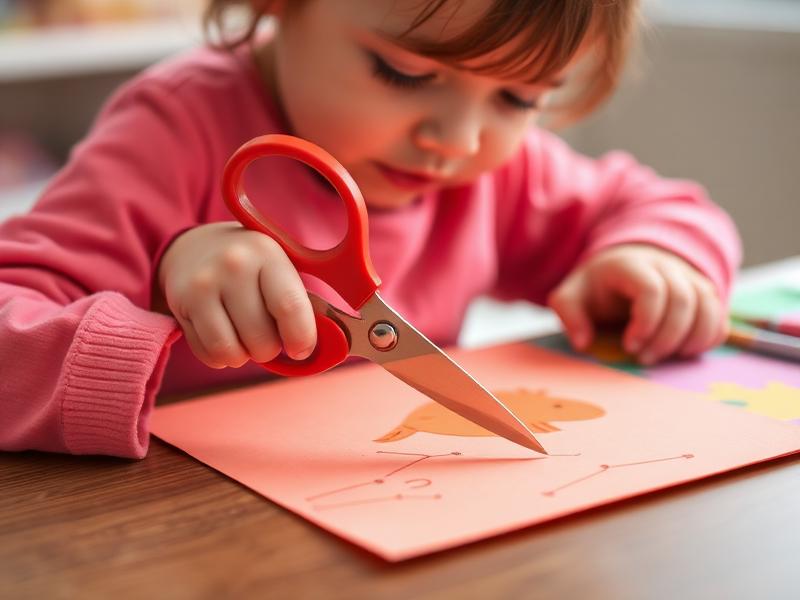
Learning to cut with scissors is a milestone that opens up a world of crafting possibilities. My daughter practiced for weeks before she could reliably cut along a line, and the look of pride on her face when she finally did it was worth every frustrating minute. Safety scissors practice isn't just about cutting—it's about building the hand strength, coordination, and persistence that will serve kids throughout life. Start with playdough, move to thick paper, and celebrate every snip along the way.
Age Safety Note
Only use child-safe scissors with blunt tips and protected blades. These cannot cut skin under normal use. Teach proper scissor handling from day one: scissors point down when walking, scissors stay at the table, scissors are for cutting paper not hair. Always supervise scissor use. For children who struggle with hand strength, consider spring-loaded adaptive scissors that open automatically.
Why This Activity Works
Using scissors develops the small muscles in hands that will later control pencils for writing. The bilateral coordination required—one hand holds paper, the other cuts—strengthens brain connections between hemispheres. Following a cutting line builds visual-motor integration. And mastering a 'grown-up' skill like scissor use builds confidence and independence. These developmental benefits make scissor practice well worth the time investment.
Materials Needed
- Child-safe scissors
Blunt-tipped, rounded edges. Spring-loaded versions help children with weak grip.
- Playdough
For early practice—much easier to cut than paper.
- Thick paper
Construction paper or cardstock is easier than thin copy paper.
- Cutting templates
Lines to follow—start with thick straight lines, progress to curves.
- Old magazines
For free-form cutting practice once skills develop.
Prep Tips (Before You Start)
- 1Start with playdough cutting—it's easier and builds the open-close motion.
- 2Draw thick, bold lines on paper for visible cutting guides.
- 3Begin with straight lines, then progress to curves and shapes.
- 4Hold paper yourself at first so child can focus just on the scissors.
- 5Keep sessions short—hand fatigue is real for little muscles.
Step-by-Step Guide
- 1Begin with playdough: roll snakes and let child 'chop' them into pieces with scissors.
- 2Celebrate every snip: 'You cut it! The scissors went snip snip!'
- 3When playdough cutting is easy, introduce paper with thick lines to follow.
- 4Hold the paper taut while child focuses on cutting motion.
- 5Progress to child holding paper with one hand while cutting with the other.
- 6Practice with curved lines and simple shapes as skills develop.
- 7Graduate to free-form cutting—cutting pictures from magazines or catalogs.
Fun Variations to Try
- •Create a 'snip jar'—count how many snips to fill a jar with paper pieces.
- •Cut strips of paper and make paper chains.
- •Practice cutting along wavy, zigzag, and spiral lines.
- •Cut out simple shapes for collage projects.
Cleanup Tips
- Paper scraps can fill a 'confetti jar' for later art projects.
- Store scissors in a designated spot—always blade-closed and tips down.
- Sweep or vacuum small paper pieces; they get everywhere.
- Wipe scissors with a dry cloth periodically to remove paper residue.
Real Parent Story
"Maya wanted to use scissors SO badly. She'd watch me cut things and grab for them, frustrated that this tool was off-limits. When I finally introduced safety scissors, her enthusiasm was... aggressive. She attacked the paper. Scissors flew. Paper shredded. Nothing was cut along a line. For weeks. I won't lie—I wondered if she'd ever get it. But we kept practicing, and slowly, the chaotic slashing became controlled snips. Then snips became cuts. Then cuts started following lines. The day she cut a circle out of paper—a whole, intact circle—she ran through the house showing everyone. 'I CUT A CIRCLE!' She was so proud. That circle is still on our fridge. Learning scissors taught her that hard things become easy with practice. That's a lesson beyond crafts. That's a life lesson."
— Jen, mom of 3.5-year-old Maya
Bonus Tips From Parents
- Hand fatigue is common—take breaks before frustration sets in.
- Thick paper is easier to cut than thin paper—don't start with copy paper.
- Right-handed and left-handed scissors exist—make sure you have the correct type.
- Demonstrate 'thumbs up' position: thumb in the small hole, fingers in the big hole.
References & Further Reading
General guidance we rely on when writing activities. These are broad resources rather than sources for this specific craft.
Toddler Ages & Stages
American Academy of Pediatrics
What to expect physically, socially and cognitively from 1 to 3 years.
The Power of Play
American Academy of Pediatrics
Why unstructured, hands-on play matters more than structured lessons at this age.
Choking Prevention
American Academy of Pediatrics
How to judge whether an object is a choking risk, and what to do if it happens.
Art Material Safety & the AP Seal
Art & Creative Materials Institute
Look up which craft supplies are certified non-toxic for children.
Toddler Play & Learning
Raising Children Network
Evidence-based play ideas grouped by developmental skill.
Poison Control
America's Poison Centers
Free 24/7 guidance if your child swallows something they shouldn't.
Ready for more fun?