Simple Origami
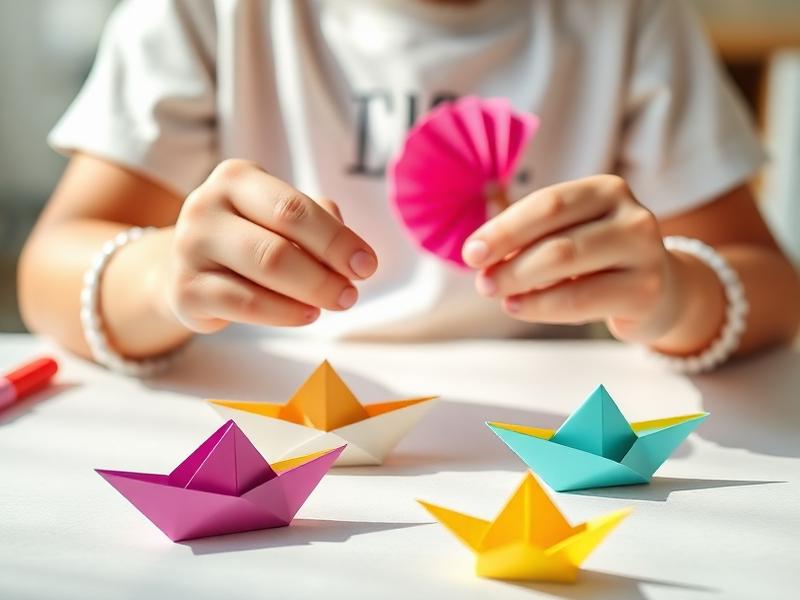
Folding paper into recognizable shapes feels like magic to young children. When a flat square transforms into a boat, a hat, or an airplane, their eyes light up with wonder. Simple origami is an ancient art form that's perfect for preschoolers when you choose age-appropriate projects. We started with paper fans and fortune tellers before attempting the classic crane (which we still haven't mastered, but that's okay). The process of following steps, matching corners, and making crisp creases teaches patience and precision in the gentlest way.
Age Safety Note
Paper edges can give paper cuts, so handle fresh-cut paper carefully. Pre-fold creases for younger children if frustration runs high. Keep projects simple—complex origami leads to tears at this age. Use standard origami paper or cut squares from regular paper; avoid heavyweight cardstock that's hard to fold. Decorate with crayons or stickers, not scissors or sharp embellishments.
Why This Activity Works
Origami develops fine motor control, spatial reasoning, and sequential thinking all at once. Following step-by-step instructions prepares children for later academic skills like reading and math procedures. The transformation of paper from flat to three-dimensional is early engineering. And completing a project—even a simple fan—provides satisfaction and confidence. Origami also requires calm, focused attention, making it excellent for regulation.
Materials Needed
- Square paper
Origami paper is ideal but any paper cut into squares works.
- Crayons or markers
For decorating finished projects.
- Stickers
Add faces, patterns, or details to folded creations.
- Picture instructions
Visual step-by-step guides are easier than verbal directions for this age.
Prep Tips (Before You Start)
- 1Pre-cut paper into squares if you're using regular paper.
- 2Practice the project yourself first so you can guide confidently.
- 3For first projects, pre-fold the creases lightly so children have guides to follow.
- 4Choose projects with 5 steps or fewer for beginners.
- 5Set expectations: origami requires patience and that's okay.
Step-by-Step Guide
- 1Start with the simplest project: a paper fan. Fold paper accordion-style back and forth.
- 2Pinch one end together, spread the other—instant fan!
- 3Progress to paper boats or hats with more complex folds.
- 4Demonstrate each fold slowly, then let child copy. 'Fold corner to corner.'
- 5Help them press creases firmly. 'Smooth it down!'
- 6When the project is complete, celebrate: 'You made a boat!'
- 7Decorate with crayons, markers, or stickers.
- 8Play with the creation—float boats, wear hats, wave fans.
Fun Variations to Try
- •Start with fan folds—simplest and immediately useful.
- •Make paper airplanes and have flying contests.
- •Create a fortune teller (cootie catcher) for prediction games.
- •Try animal faces: dog and cat faces are beginner-friendly.
Cleanup Tips
- Save finished origami in a 'creation box' or display on a shelf.
- Recycle practice papers that didn't work out.
- Flatten failed attempts to reuse as decoration paper.
- Store square paper in a folder or container for next time.
Real Parent Story
"My grandmother taught me origami when I was young, and I wanted to share that tradition with Hana. We started with paper fans on a rainy Saturday. Hana was instantly hooked. She wanted to fold everything. We progressed through boats, hats, and airplanes over the following weeks. Some were lumpy. Some barely resembled what they were supposed to be. She didn't care. To her, every fold was a triumph. One day, she came to me with a piece of paper and said, 'Daddy, I want to make Grandma a bird.' My grandmother had passed years before Hana was born. I showed Hana how to make a simple bird—not a crane, just a basic shape with wings. She folded it herself, colored it purple (Grandma's favorite color, I'd told her), and asked me to put it somewhere safe. It's in a frame on my desk now, this lumpy purple bird made by my daughter for a grandmother she never met. Origami isn't just paper folding. It's connection. It's legacy. It's love that transcends generations."
— Kenji, dad of 4-year-old Hana
Bonus Tips From Parents
- Start simpler than you think—fans and fortune tellers before animals.
- Crisp creases make better origami—run your fingernail along each fold.
- Wonky origami is still successful origami. Celebrate effort.
- Look up 'easy origami for kids' for age-appropriate project ideas.
References & Further Reading
General guidance we rely on when writing activities. These are broad resources rather than sources for this specific craft.
Toddler Ages & Stages
American Academy of Pediatrics
What to expect physically, socially and cognitively from 1 to 3 years.
The Power of Play
American Academy of Pediatrics
Why unstructured, hands-on play matters more than structured lessons at this age.
Choking Prevention
American Academy of Pediatrics
How to judge whether an object is a choking risk, and what to do if it happens.
Art Material Safety & the AP Seal
Art & Creative Materials Institute
Look up which craft supplies are certified non-toxic for children.
Toddler Play & Learning
Raising Children Network
Evidence-based play ideas grouped by developmental skill.
Poison Control
America's Poison Centers
Free 24/7 guidance if your child swallows something they shouldn't.
Ready for more fun?