Simple Weaving
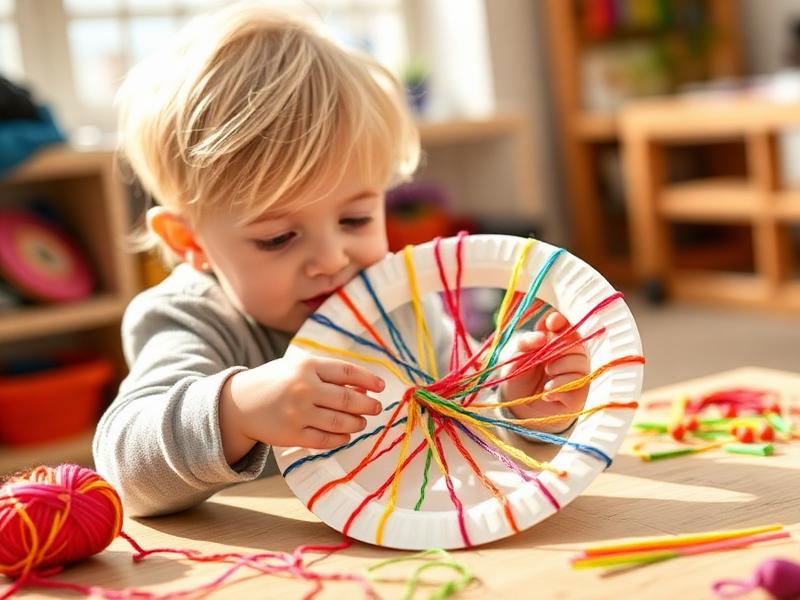
Weaving is ancient, meditative, and surprisingly accessible to preschoolers when you simplify the loom. We started with a paper plate that I'd cut slits into, turning it into a circular loom. My daughter wove yarn through the slits in an over-under pattern, creating a colorful woven creation that looked like a dreamcatcher. She was entranced by the rhythm of it—over, under, over, under. The repetitive motion seemed to calm her even as it challenged her fine motor skills.
Age Safety Note
Pre-cut all slits in paper plates—cutting tools are not for this age group. Use blunt-tipped yarn needles if available, or just floppy yarn ends. Ensure yarn is long enough to manipulate but not so long it becomes a tangle. Supervise to prevent yarn around necks or fingers. No small beads or embellishments that could be choking hazards.
Why This Activity Works
Weaving develops bilateral coordination as one hand holds the loom while the other weaves. The over-under pattern introduces sequencing and pattern recognition—early math skills. The tactile experience of different yarn textures is sensory-rich. And the meditative quality of repetitive weaving helps regulate active children. Completing a woven piece provides a tangible, beautiful product that children are proud to display.
Materials Needed
- Paper plate with slits
Cut 8-12 evenly spaced slits from edge toward center. Adults pre-cut this.
- Yarn
Multiple colors. Cut into arm-length pieces for manageability.
- Fabric strips
An alternative to yarn—easier to grip for some children.
- Blunt plastic needle (optional)
Makes threading yarn easier but isn't essential.
Prep Tips (Before You Start)
- 1Cut slits in paper plates ahead of time—12 slits evenly spaced works well.
- 2Cut yarn into manageable lengths (about 2-3 feet each).
- 3Consider taping the first yarn end to the back of the plate to secure it.
- 4Use two contrasting colors to make the over-under pattern visible.
- 5Have extra yarn ready for color changes.
Step-by-Step Guide
- 1Show the prepared paper plate loom. 'We're going to weave yarn through these cuts!'
- 2Demonstrate: 'Over, under, over, under...' with exaggerated motions.
- 3Start the yarn for your child, taping one end to the back if needed.
- 4Guide first few weaves: 'Now you try. Over this flap... under this one...'
- 5Let them continue independently, helping only when asked.
- 6Add new yarn colors by tying ends together and continuing the weave.
- 7When the loom is full, tuck or tie loose ends on the back.
- 8Admire the finished weaving and display it prominently!
Fun Variations to Try
- •Weave through a colander or mesh container instead of paper.
- •Use pipe cleaners instead of yarn for stiffer weaving.
- •Add nature items: weave leaves or grass into the design.
- •Create square looms from cardboard for more traditional weaving.
Cleanup Tips
- Roll up unused yarn to prevent tangles.
- Store paper plate looms flat until weaving is complete.
- Yarn scraps can be saved for collage projects.
- Display finished weavings on walls or doors as art.
Real Parent Story
"Ananya is my high-anxiety child. New activities overwhelm her; she cries if she can't do something perfectly on the first try. Art has always been fraught—tears, crumpled paper, declarations of 'I CAN'T!' Weaving changed that. There's something about the repetitive motion, the clear pattern, the inability to make a 'mistake.' Over, under. Over, under. She could do that. She could DO THAT. The first time she finished a paper plate weaving, she held it up with the most peaceful expression I'd ever seen on her face. 'I made this,' she said, not with excitement but with calm satisfaction. Now we weave every Sunday morning. It's our ritual, our quiet time together. The repetition that I thought might bore her actually soothes her. She hums while she weaves, completely at peace. Her therapist says weaving is 'self-regulating.' I say it's magic. Same thing, probably."
— Priya, mom of 4-year-old Ananya
Bonus Tips From Parents
- Two contrasting colors make the over-under pattern easier to see.
- If yarn is too floppy, stiffen one end with tape or use pipe cleaners instead.
- Pull yarn gently—tugging too hard puckers the paper plate.
- Hang finished weavings in windows; light shines through beautifully.
References & Further Reading
General guidance we rely on when writing activities. These are broad resources rather than sources for this specific craft.
Toddler Ages & Stages
American Academy of Pediatrics
What to expect physically, socially and cognitively from 1 to 3 years.
The Power of Play
American Academy of Pediatrics
Why unstructured, hands-on play matters more than structured lessons at this age.
Choking Prevention
American Academy of Pediatrics
How to judge whether an object is a choking risk, and what to do if it happens.
Art Material Safety & the AP Seal
Art & Creative Materials Institute
Look up which craft supplies are certified non-toxic for children.
Toddler Play & Learning
Raising Children Network
Evidence-based play ideas grouped by developmental skill.
Poison Control
America's Poison Centers
Free 24/7 guidance if your child swallows something they shouldn't.
Ready for more fun?