Sock Puppet Friends
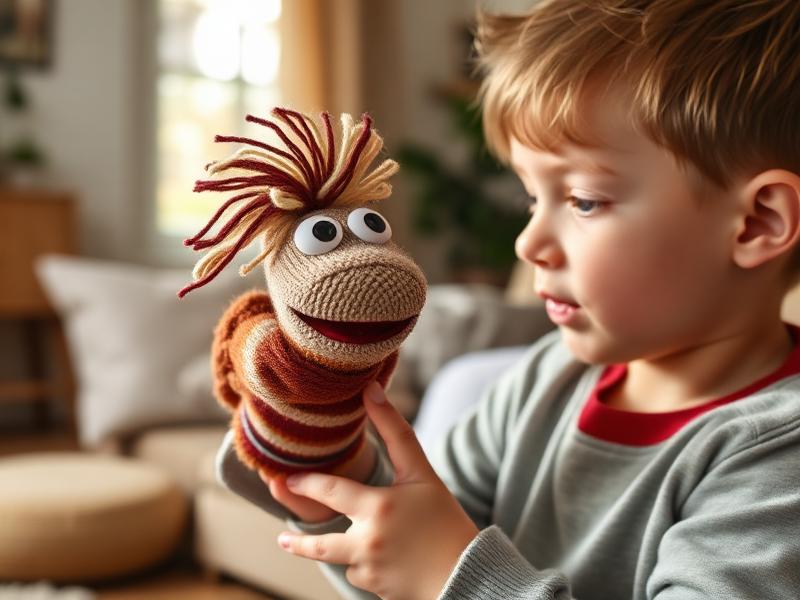
Every parent has a drawer full of orphaned socks—those lonely singles whose partners vanished somewhere between the washer and the dryer. Our 'lonely sock drawer' used to frustrate me until my mother-in-law taught us to turn them into puppets. Now that drawer is our treasure chest. My toddler will sometimes rifle through it looking for 'the stripy one' or 'the soft gray one' for our next puppet show. The best part? Puppets give shy kids a voice. My son, who can be hesitant to express himself, will say anything through 'Mr. Fuzzy.'
Age Safety Note
Sock puppets are wonderful for children from 2 to 4 years old. The key safety consideration is avoiding buttons or other small objects for eyes and noses—these are serious choking hazards for young children. Use fabric markers to draw features, or glue on large felt circles under close adult supervision. When using fabric glue, an adult should apply it while the child places the decorations. Check that any yarn hair is securely attached before play, and inspect puppets periodically for loose pieces.
Why This Activity Works
Puppets are powerful developmental tools disguised as silly fun. When a child speaks through a puppet, something interesting happens in their brain: they feel braver. The puppet becomes a safe way to express feelings, practice social scenarios, and experiment with different voices and personalities. For 2-4 year olds who are rapidly developing language skills, puppets provide an audience and a reason to talk. The crafting process itself strengthens fine motor skills and decision-making ('Where should the eyes go?'), while the creative storytelling that follows builds narrative skills and imagination.
Materials Needed
- Clean old socks
Adult-sized socks work better—more room for a child's hand and face. Solid colors or fun patterns both work great.
- Fabric markers
Non-toxic and washable. These are safer than gluing on button eyes and let kids draw their own features.
- Yarn for hair
Pre-cut into 3-5 inch pieces. Different colors let kids create unique characters.
- Fabric glue
Adult applies the glue; child places the decorations. Hot glue guns are NOT safe for this age group.
- Felt circles (optional)
Large circles (1-2 inches) can be glued on for eyes if you prefer not to use markers.
Prep Tips (Before You Start)
- 1Wash the socks first if they came from the 'who knows where these have been' drawer.
- 2Pre-cut yarn into various lengths so kids can choose 'long hair' or 'short hair' for their character.
- 3Have a flat, protected surface ready for decorating—fabric marker can bleed through to tables.
- 4Try the markers on a scrap piece of sock fabric first to see how the colors look.
- 5Set up a small mirror nearby so kids can see themselves with their puppet—they love this!
Step-by-Step Guide
- 1Put your hand in a sock and show your child how it 'talks' by moving your thumb against your fingers. Make it say hello in a silly voice!
- 2Invite your child to put their hand in a sock. Help them find the right position—thumb in the heel, fingers in the toe.
- 3Ask: 'What should we name your puppet? Is it a boy or a girl or an animal?' Let their imagination run wild.
- 4Now the decorating begins! Guide their hand to draw two eyes with fabric marker. Remind them that googly eyes are fun—perfection is not the goal.
- 5Add a nose and a mouth. Some kids want big toothy smiles; others want tiny dots. Both are perfect.
- 6For hair, have an adult put small dots of fabric glue on the 'head' area while the child places yarn pieces. Press firmly.
- 7Wait 10-15 minutes for glue to dry (a good time for a snack break). Then inspect to make sure everything is secure.
- 8Time for a puppet show! Create a simple stage by draping a blanket over two chairs, or just use the back of the couch.
Fun Variations to Try
- •Make animal puppets: add felt ears for a cat, a pink nose for a pig, or button spots (for older kids) for a ladybug.
- •Create a puppet family with mom, dad, and baby puppets for pretend play.
- •Make holiday puppets: Santa with cotton ball beard, a green 'monster' for Halloween, or a bunny for Easter.
- •Use tube socks to make snake puppets—decorate the whole length with scales!
Cleanup Tips
- Fabric marker on hands washes off with soap and water, though it might take a good scrub.
- Store finished puppets in a special box or basket near the play area for easy access.
- Old, worn-out puppets can become dust rags—a good way to retire beloved characters.
- Unused yarn and socks store perfectly in a ziplock bag for future puppet-making sessions.
Real Parent Story
"Ravi had just started talking when we made his first sock puppet, and something clicked. He named it 'Mr. Socky' (his own invention), and suddenly this shy little boy who barely spoke in sentences was having full conversations—through the puppet. Mr. Socky told me about his day at preschool. Mr. Socky explained why he didn't want to eat broccoli. Mr. Socky asked for stories at bedtime. It was like having a translator for my toddler's inner world. That original Mr. Socky is now falling apart after four months of constant love. We've repaired the yarn hair twice and re-drawn the face when it faded. Ravi sleeps with it every night and insists it comes to grandma's house. Last week, he asked to make a 'Mrs. Socky' so Mr. Socky wouldn't be lonely. Now they have conversations with each other, and I just get to listen. It's the sweetest thing I've ever witnessed. A mismatched sock turned into one of our most treasured possessions."
— Priya, mom of 2.5-year-old Ravi
Bonus Tips From Parents
- Give your own puppet a funny voice when playing together—kids find this hilarious.
- Use puppets to practice difficult situations: going to the doctor, meeting new kids, sharing toys.
- Take photos of each puppet when it's new so you can remember them when they inevitably wear out.
- Teach siblings to make puppets together—great bonding activity for different ages.
References & Further Reading
General guidance we rely on when writing activities. These are broad resources rather than sources for this specific craft.
Toddler Ages & Stages
American Academy of Pediatrics
What to expect physically, socially and cognitively from 1 to 3 years.
The Power of Play
American Academy of Pediatrics
Why unstructured, hands-on play matters more than structured lessons at this age.
Choking Prevention
American Academy of Pediatrics
How to judge whether an object is a choking risk, and what to do if it happens.
Art Material Safety & the AP Seal
Art & Creative Materials Institute
Look up which craft supplies are certified non-toxic for children.
Toddler Play & Learning
Raising Children Network
Evidence-based play ideas grouped by developmental skill.
Poison Control
America's Poison Centers
Free 24/7 guidance if your child swallows something they shouldn't.
Ready for more fun?