Water Play Station
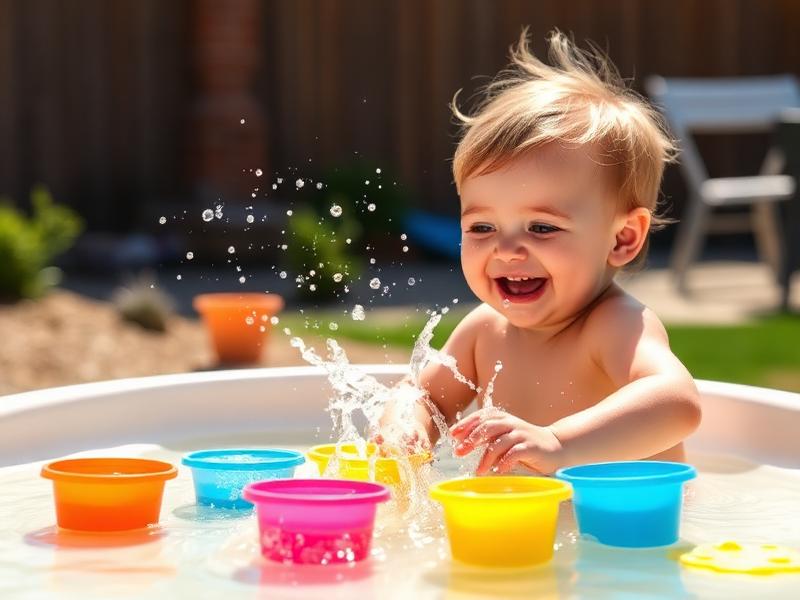
Water is the original sensory material. My daughter could splash in water for hours, whether it was a mud puddle, a dog bowl, or her own bathwater. So I created a designated water play station—a shallow container on a towel, filled with just enough water to splash without drowning risk. She poured, she scooped, she dunked her toys, she patted the surface just to watch droplets jump. This controlled water play gave her the sensory experience she craved while keeping her safe and keeping me (mostly) dry.
Age Safety Note
Water safety is serious business. Babies can drown in just one inch of water, so constant, attentive supervision is absolutely non-negotiable. Never leave a baby unattended near water—not for a phone call, not for a doorbell, not for any reason. Keep water shallow (1-2 inches maximum). Empty the container immediately after play. And consider water play location: tile floors are easier to clean than carpet, and outdoor play eliminates floor cleanup entirely.
Why This Activity Works
Water play is a multi-sensory powerhouse. Babies experience temperature, weight, resistance, and sound all at once. Pouring develops hand-eye coordination. Scooping builds motor skills. Splashing teaches cause and effect. The calming nature of water play can also regulate overstimulated babies—there's a reason baths are part of bedtime routines. Water play is infinitely variable: different containers, different tools, different temperatures all create new experiences from the same basic material.
Materials Needed
- Shallow container
A dish tub, under-bed storage box, or baking pan works well. No deeper than 2 inches of water.
- Plastic cups and containers
Different sizes for pouring practice. Avoid glass entirely.
- Sponges
Great for squeezing—squeeze is excellent for hand strength.
- Bath toys
Rubber ducks, floating boats, watering cans designed for water play.
- Towels
Several: under the container, around the container, and ready for cleanup.
Prep Tips (Before You Start)
- 1Set up in a splash-friendly location: bathroom, kitchen, or outdoors.
- 2Lay large towels under and around the container to catch spills.
- 3Fill with lukewarm water—cold water is unpleasant and hot water is dangerous.
- 4Have dry towels within reach for drying hands and mopping spills.
- 5Dress baby in just a diaper or swim clothes—clothes will get soaked.
Step-by-Step Guide
- 1Set up the water container with just 1-2 inches of water and place toys inside.
- 2Sit baby near the container (high chair, bumbo, or floor with support).
- 3Demonstrate splashing, pouring, and scooping: 'Look! The water goes IN the cup!'
- 4Let baby explore freely. Stay within arm's reach at all times.
- 5Narrate what's happening: 'You're splashing! The water is going up in the air!'
- 6Offer different tools for different experiences: cups for pouring, sponges for squeezing.
- 7When baby loses interest or gets cold, end the session with a dry-off cuddle.
- 8Empty the water immediately. Never leave standing water unattended.
Fun Variations to Try
- •Add food coloring for colored water exploration.
- •Include ice cubes for temperature variation and melting observation.
- •Float different objects and discuss which sink and which float.
- •Add baby-safe bubbles for foam play.
Cleanup Tips
- Empty water immediately after play—never leave standing water accessible to babies.
- Let towels dry before washing; wet towels mildew quickly in the hamper.
- Wipe down water toys to prevent mold growth in the crevices.
- Store containers and toys where baby can't access water sources independently.
Real Parent Story
"Bath time was always Lily's favorite, but baths are exhausting to supervise—the climbing, the slippery tub, the constant vigilance. When I discovered water table play, I found a way to give her the water experience she craved without the bath stress. Our setup is simple: a plastic bin on the kitchen floor, towels everywhere, and a collection of cups and spoons. Lily can splash and pour while I'm right there at her level, drinking my coffee and actually relaxing. The first time we did water play, she was engaged for forty-five minutes. FORTY-FIVE MINUTES. That's unheard of for a one-year-old. She poured water from cup to cup, watched it pour through a colander, and squeezed sponges until her hands were wrinkled. When I finally said 'all done,' she cried—the good kind of cry, the cry that means something was so wonderful she didn't want it to end. Now water play is our go-to for grumpy afternoons. Nothing resets her mood like ten minutes of splashing."
— Sarah, mom of 16-month-old Lily
Bonus Tips From Parents
- Time water play before bath time for easy cleanup—go straight from play to tub.
- Add measuring cups for natural math exploration: 'How many small cups fill the big cup?'
- Squeeze sponges build hand strength that helps with later tasks like zipping and buttoning.
- Talk about 'full' and 'empty' to build vocabulary during pouring activities.
References & Further Reading
General guidance we rely on when writing activities. These are broad resources rather than sources for this specific craft.
Toddler Ages & Stages
American Academy of Pediatrics
What to expect physically, socially and cognitively from 1 to 3 years.
The Power of Play
American Academy of Pediatrics
Why unstructured, hands-on play matters more than structured lessons at this age.
Choking Prevention
American Academy of Pediatrics
How to judge whether an object is a choking risk, and what to do if it happens.
Art Material Safety & the AP Seal
Art & Creative Materials Institute
Look up which craft supplies are certified non-toxic for children.
Toddler Play & Learning
Raising Children Network
Evidence-based play ideas grouped by developmental skill.
Poison Control
America's Poison Centers
Free 24/7 guidance if your child swallows something they shouldn't.
Ready for more fun?