Window Painting Art
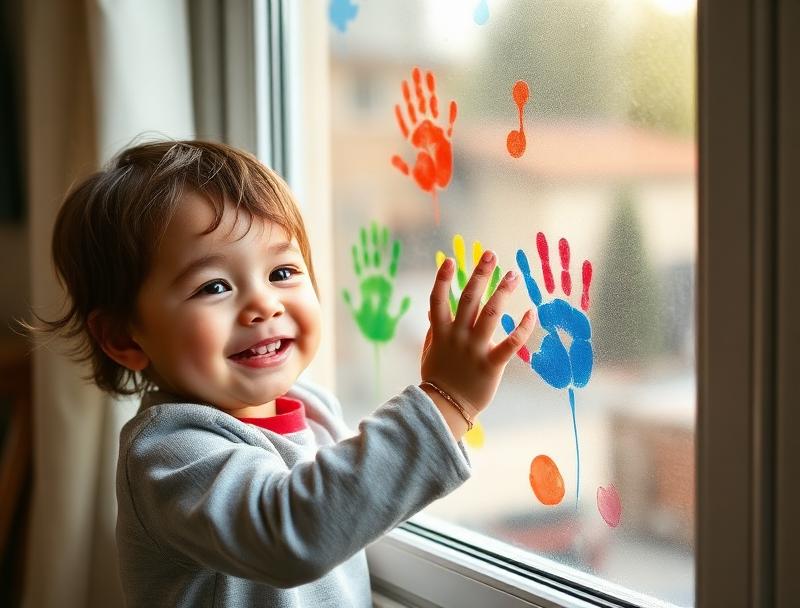
I discovered window painting by accident when my toddler got hold of my washable markers and decorated the sliding glass door. My first instinct was panic. My second was to grab the camera. The sunlight streaming through her colorful scribbles was beautiful. After that, window painting became intentional. We tape paper to the window at her height, give her washable paints or crayons, and let her create. The vertical surface is easier for standing babies to reach than a table, and the light from outside makes every mark glow. Plus, cleanup is just a spray bottle and a squeegee away.
Age Safety Note
Use only washable, non-toxic paints or crayons—anything that touches the window might also touch baby's hands, which will definitely touch baby's mouth. Test your 'washable' products on a small window area first; some need extra scrubbing. Tape paper to the window rather than letting baby paint directly on glass—paper is easier to save as art. If painting directly on glass, choose a window that's easy to clean and not in a high-visibility location in case staining occurs. Supervise closely to prevent paint from spreading to walls, floors, or baby's face.
Why This Activity Works
Vertical surfaces engage different muscles than horizontal ones, building shoulder strength and core stability. Standing and reaching while painting is a full-body activity. The natural light shining through the window enhances visual focus and makes colors appear more vivid. For babies who struggle with seated tabletop activities, window painting offers a movement-friendly alternative. And there's something magical about light passing through artwork—it transforms simple scribbles into stained glass.
Materials Needed
- Washable tempera paint
Or window paint specifically made for glass surfaces.
- Foam brushes
Easier for small hands to grip than traditional brushes.
- Window at baby's height
Sliding glass doors or low windows work well.
- Spray bottle with water
For easy cleanup and fun 'erasing.'
- Squeegee
Makes cleaning the window quick and streak-free.
- Drop cloth or towels
For catching drips below the window.
Prep Tips (Before You Start)
- 1Choose a window with good light—afternoon sun makes colors pop.
- 2Lay a towel or drop cloth below the window to catch drips.
- 3Pour small amounts of paint into cups or muffin tins for easy access.
- 4Tape paper to the window if you want to save the artwork.
- 5Dress baby in painting clothes or just a diaper for easy cleanup.
Step-by-Step Guide
- 1Set up at a window at baby's standing height (use a stool if needed).
- 2If saving artwork, tape large paper to the window at baby's reach.
- 3Offer paint and foam brushes. 'Let's paint on the window!'
- 4Demonstrate a few strokes, then step back and let baby create.
- 5Narrate colors and movements: 'Blue paint! You're making circles!'
- 6Point out the light: 'Look how the sun shines through your painting!'
- 7When paint runs low or interest fades, transition to cleanup.
- 8Spray water and squeegee together—cleanup is part of the fun!
Fun Variations to Try
- •Use window markers instead of paint for easier cleanup.
- •Paint directly on glass (no paper) and spray off for erasable play.
- •Add natural items: tape leaves to the window and paint around them.
- •Do this in bathtub with tub crayons for splash-zone art.
Cleanup Tips
- Washable paint comes off glass with water and a squeegee—easy!
- For stubborn paint, let it soak with wet paper towels before wiping.
- Clean paint from hands and face with warm washcloths.
- Check clothing and floor for drips before they dry.
Real Parent Story
"Ava is a mover. She doesn't sit. She doesn't stay still. Tabletop activities last about forty-five seconds before she's up and running. I'd given up on art with her until a friend suggested window painting. A vertical surface for a child who won't sit? Genius. We set up at our sliding glass door, and Ava stood and painted for fifteen solid minutes. FIFTEEN MINUTES. She could move her whole body—reaching up high, crouching down low, stepping side to side. The painting was wild: big sweeping strokes, dripping runs of color, an explosion of motion captured on paper. It's framed in our living room now. When I look at it, I don't see random scribbles—I see my daughter's energy, her movement, her joy. Window painting became our art solution. We do it weekly. Her attention span grows longer every time. The standing, moving format matches who she is as a kid. I'll never try to make my mover into a sitter again."
— Tanya, mom of 16-month-old Ava
Bonus Tips From Parents
- Afternoon light creates the most dramatic 'stained glass' effect through paintings.
- Use tape to create patterns—remove after painting for tape-resist window art.
- Make it social: siblings can paint on the same window together.
- Save paintings by photographing them with backlight before removing.
References & Further Reading
General guidance we rely on when writing activities. These are broad resources rather than sources for this specific craft.
Toddler Ages & Stages
American Academy of Pediatrics
What to expect physically, socially and cognitively from 1 to 3 years.
The Power of Play
American Academy of Pediatrics
Why unstructured, hands-on play matters more than structured lessons at this age.
Choking Prevention
American Academy of Pediatrics
How to judge whether an object is a choking risk, and what to do if it happens.
Art Material Safety & the AP Seal
Art & Creative Materials Institute
Look up which craft supplies are certified non-toxic for children.
Toddler Play & Learning
Raising Children Network
Evidence-based play ideas grouped by developmental skill.
Poison Control
America's Poison Centers
Free 24/7 guidance if your child swallows something they shouldn't.
Ready for more fun?